

Network Influencer - Micro SaaS
CompletedWeb App
A professional network visualisation and relationship management tool designed for maintaining and analysing LinkedIn connections. This enterprise-grade application helps users track influence, interest, and relationships within their professional network.
35
Total Feedback
Aug 21
Last Updated
Key Features
AI EnabledUser ManagementHashed PasswordsUser Authentications+4 more
Tech Stack
NodeJSReactNext.jsTypeScript+3 more
Image Gallery
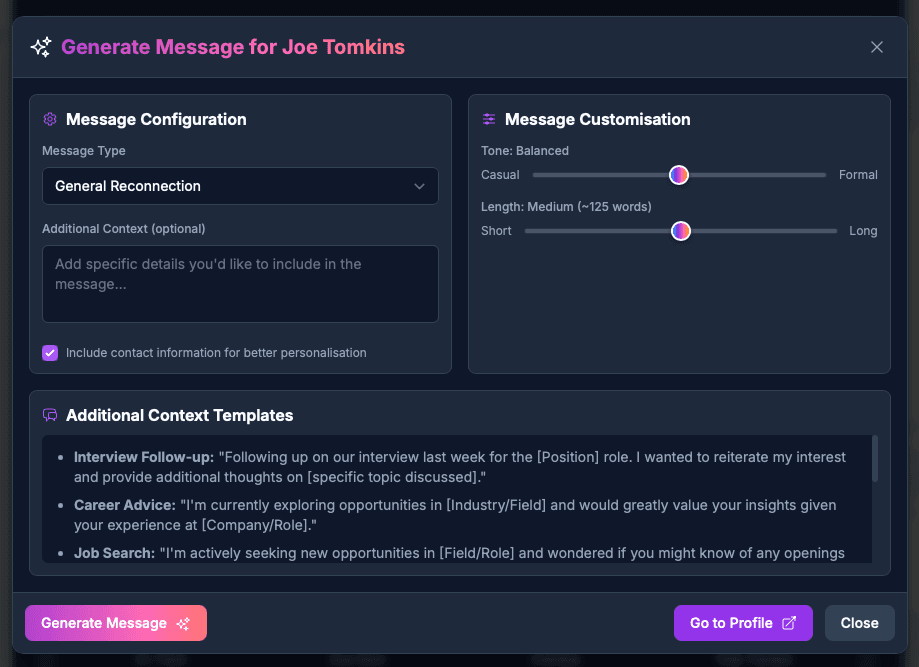
V4.0 - AI Message Generation
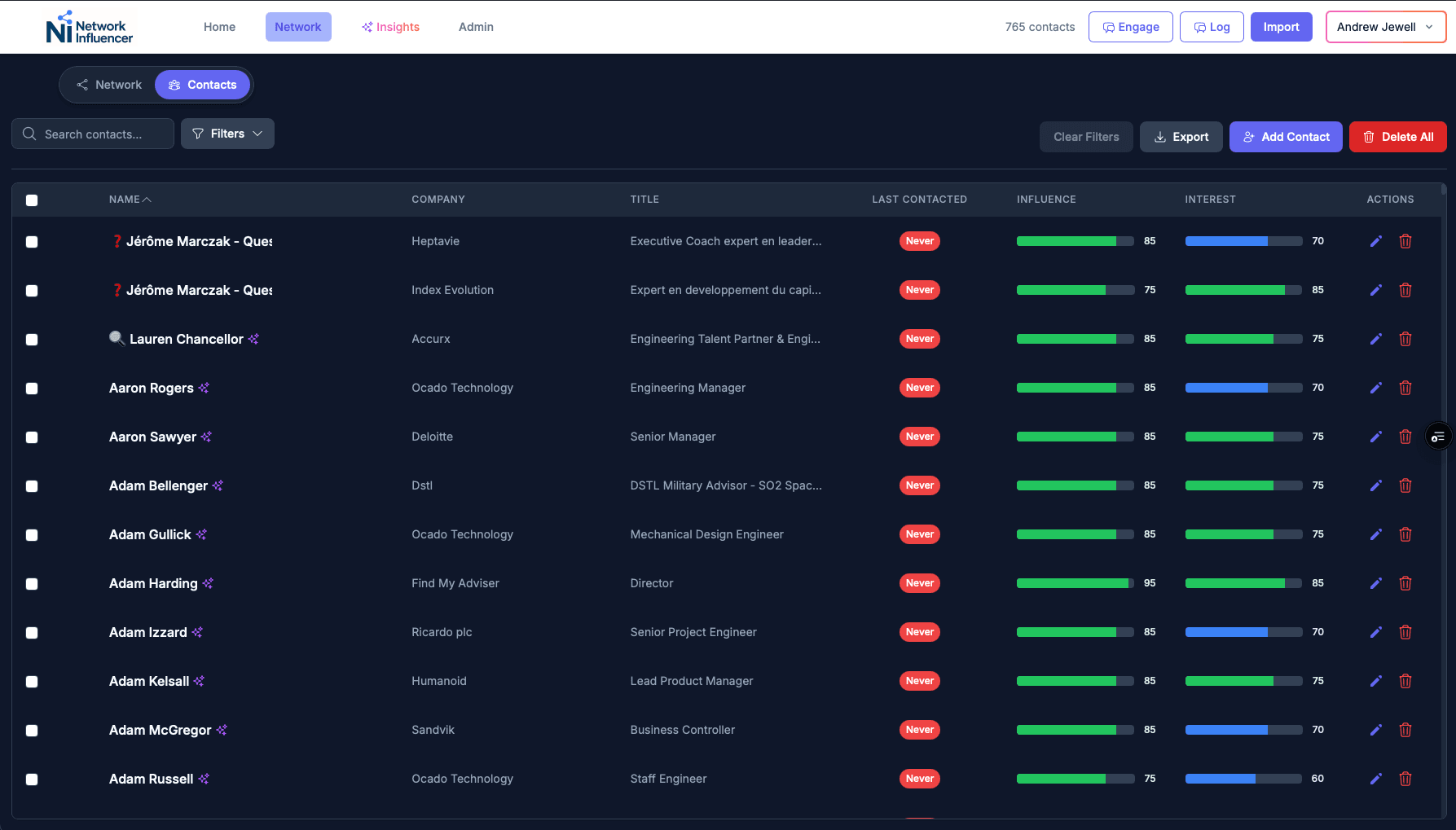
V4.0 - Contacts View
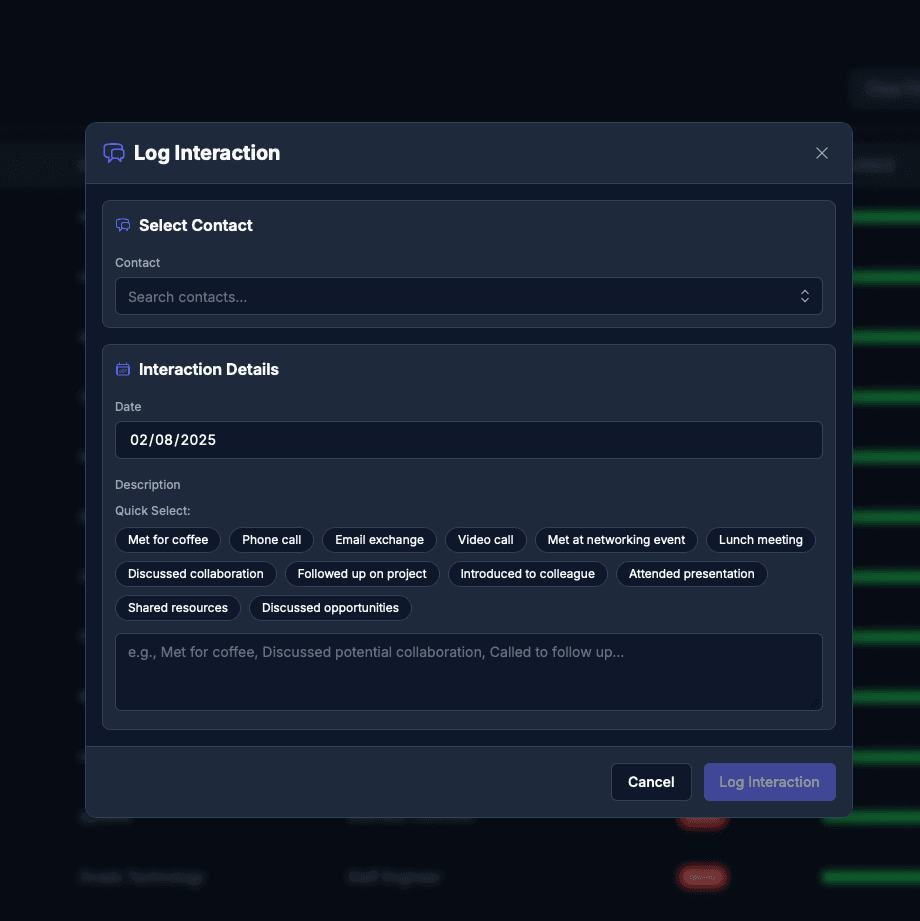
V4.0 - Log Interaction
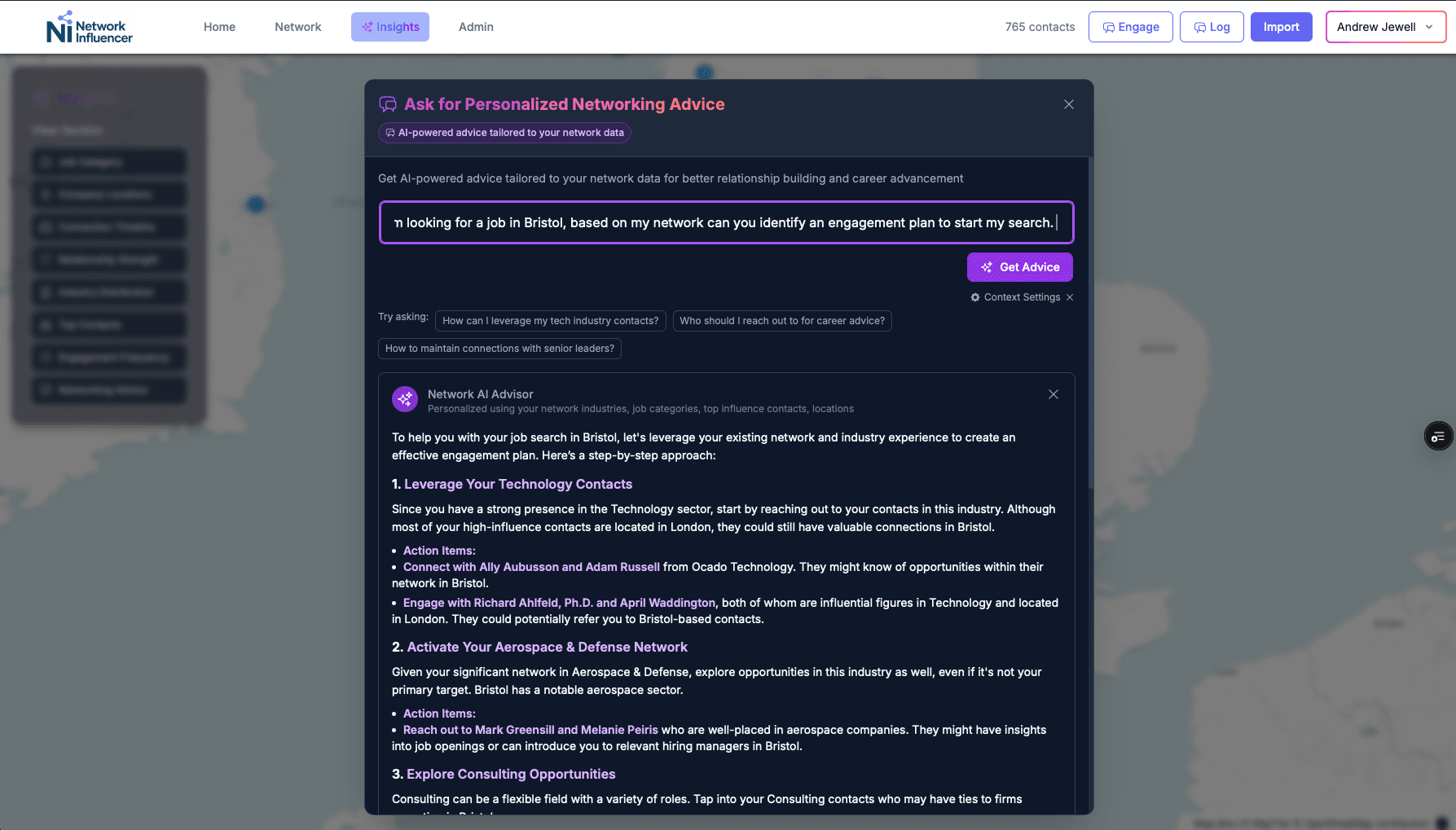
V4.0 - AI Network Advice
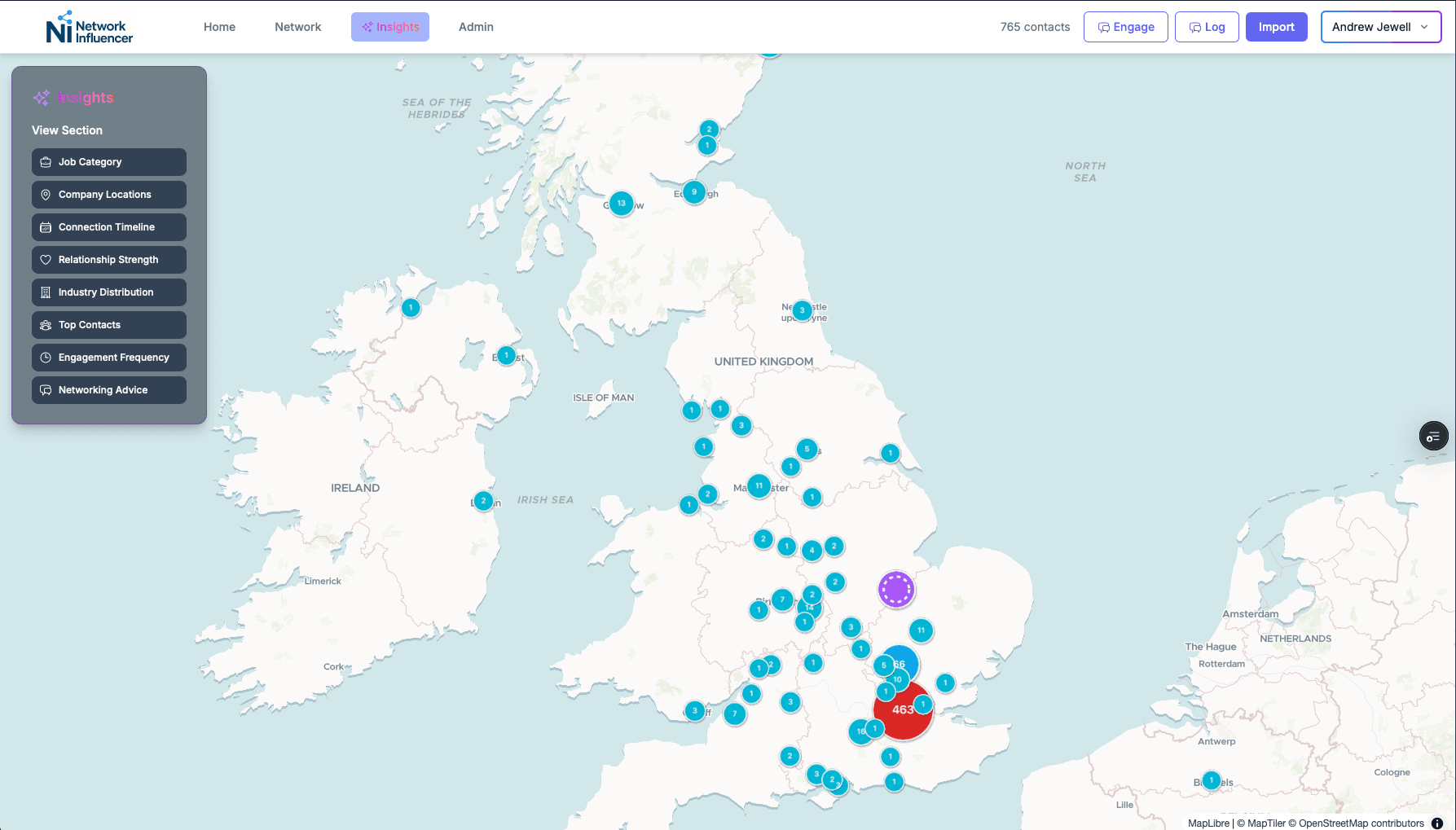
V4.0 - Insights Page
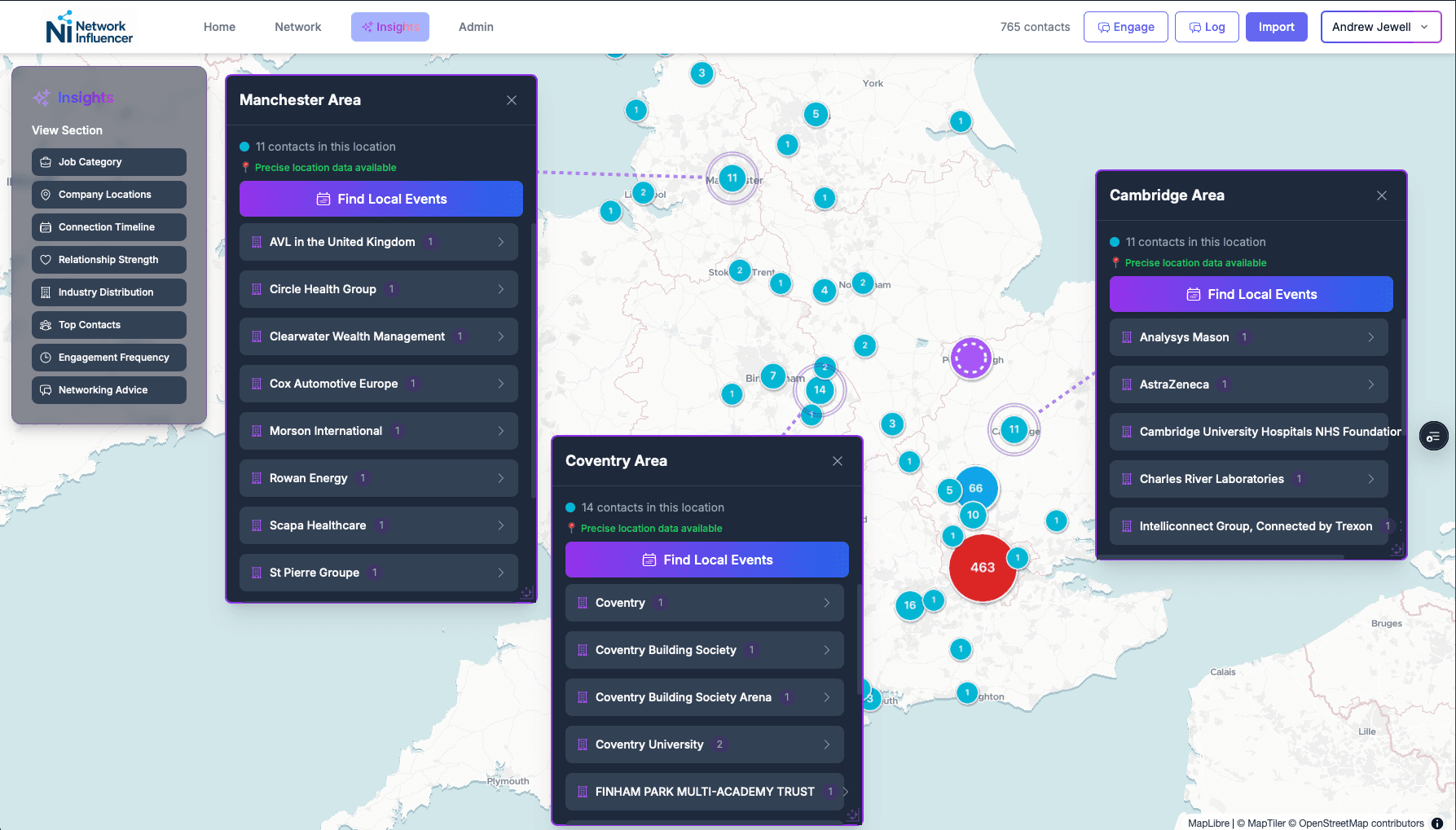
V4.0 - Insights Locations
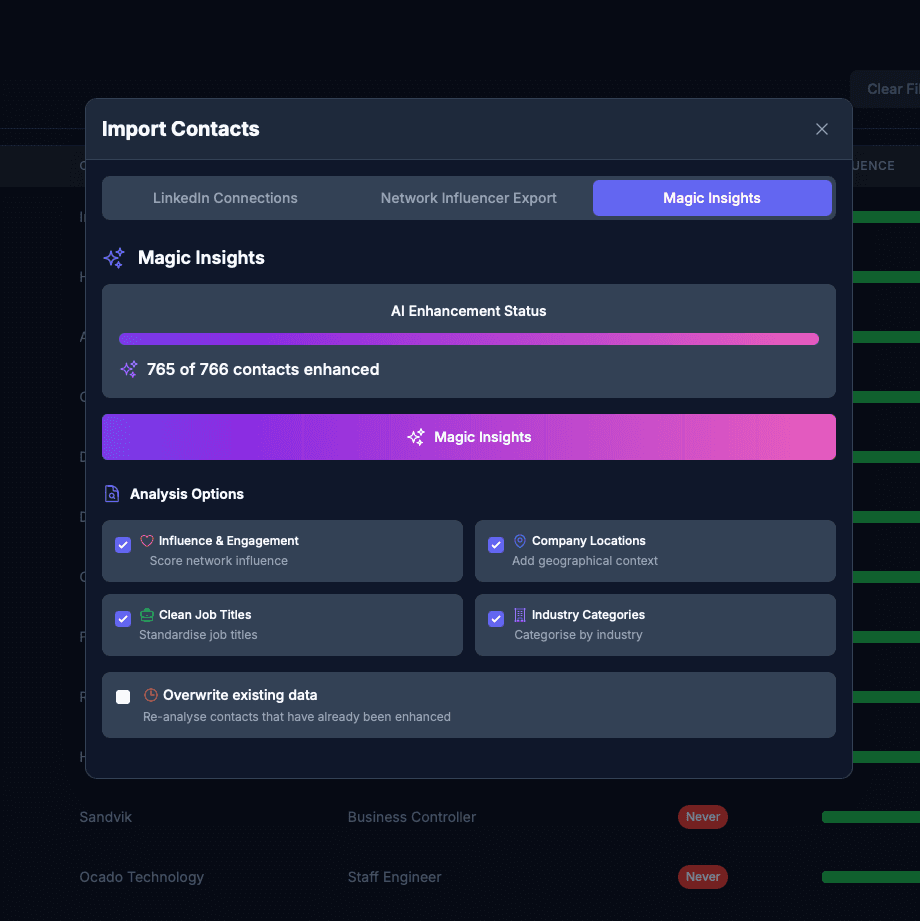
V4.0 - Import Enhance Contacts
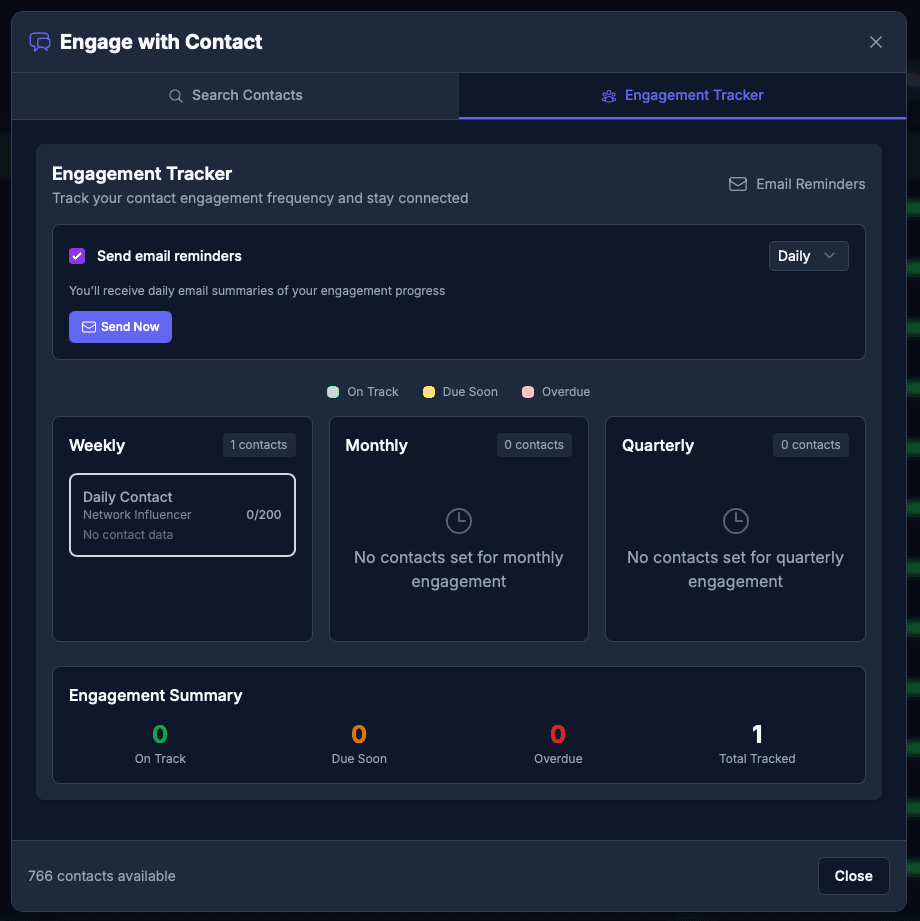
V4.0 - Contacts Engagement
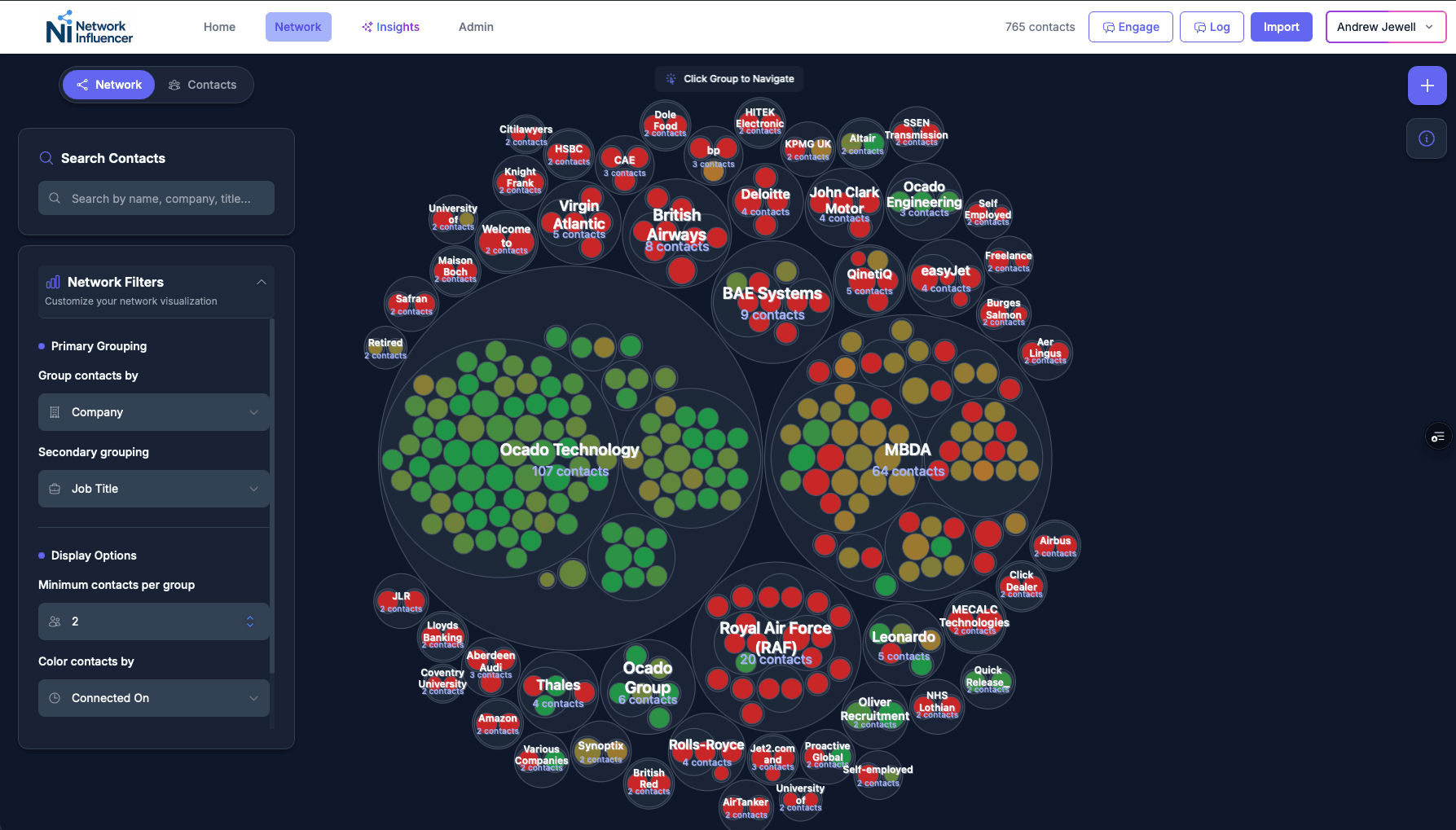
V4.0 - Network View
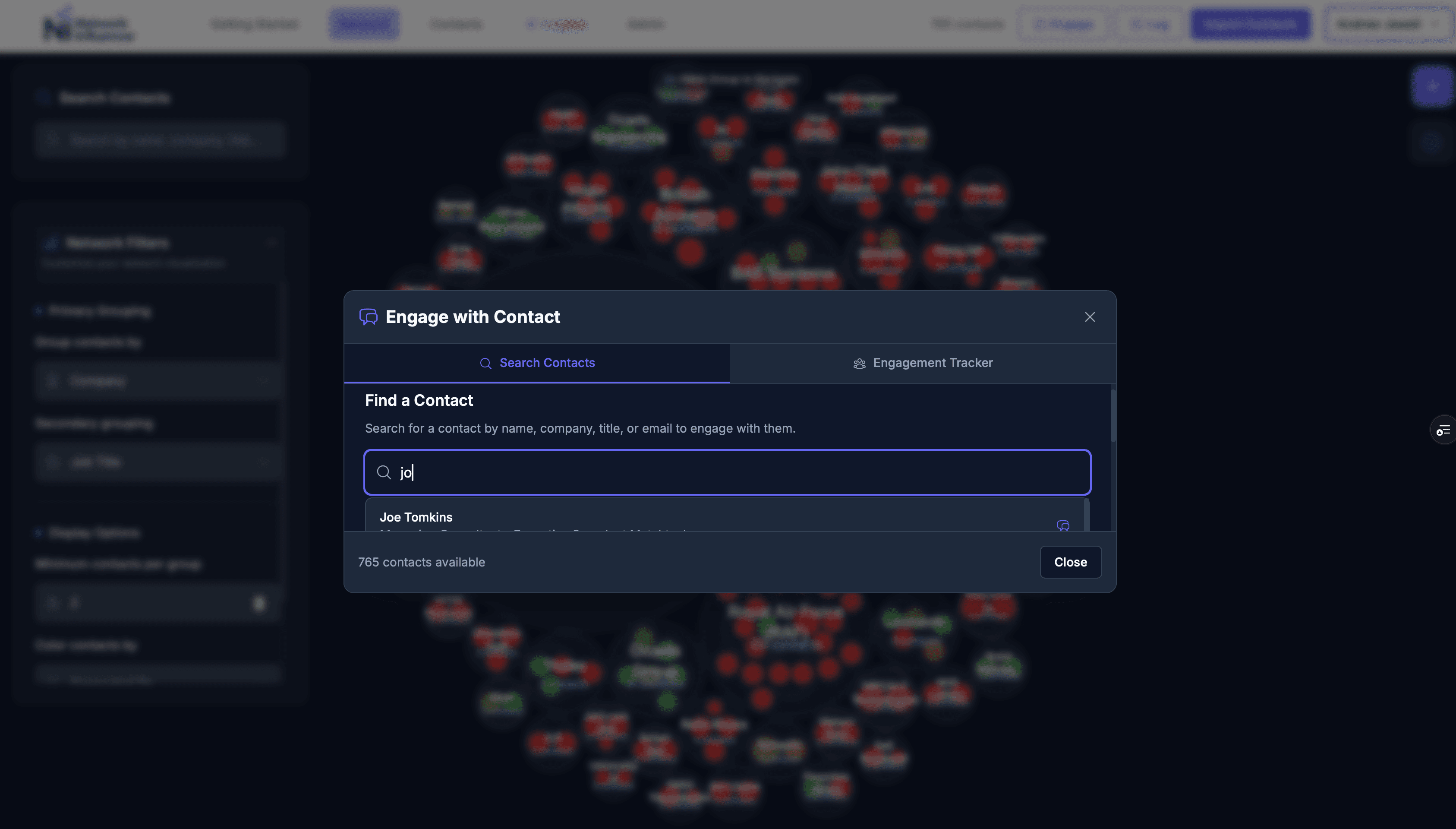
Engage your contacts.
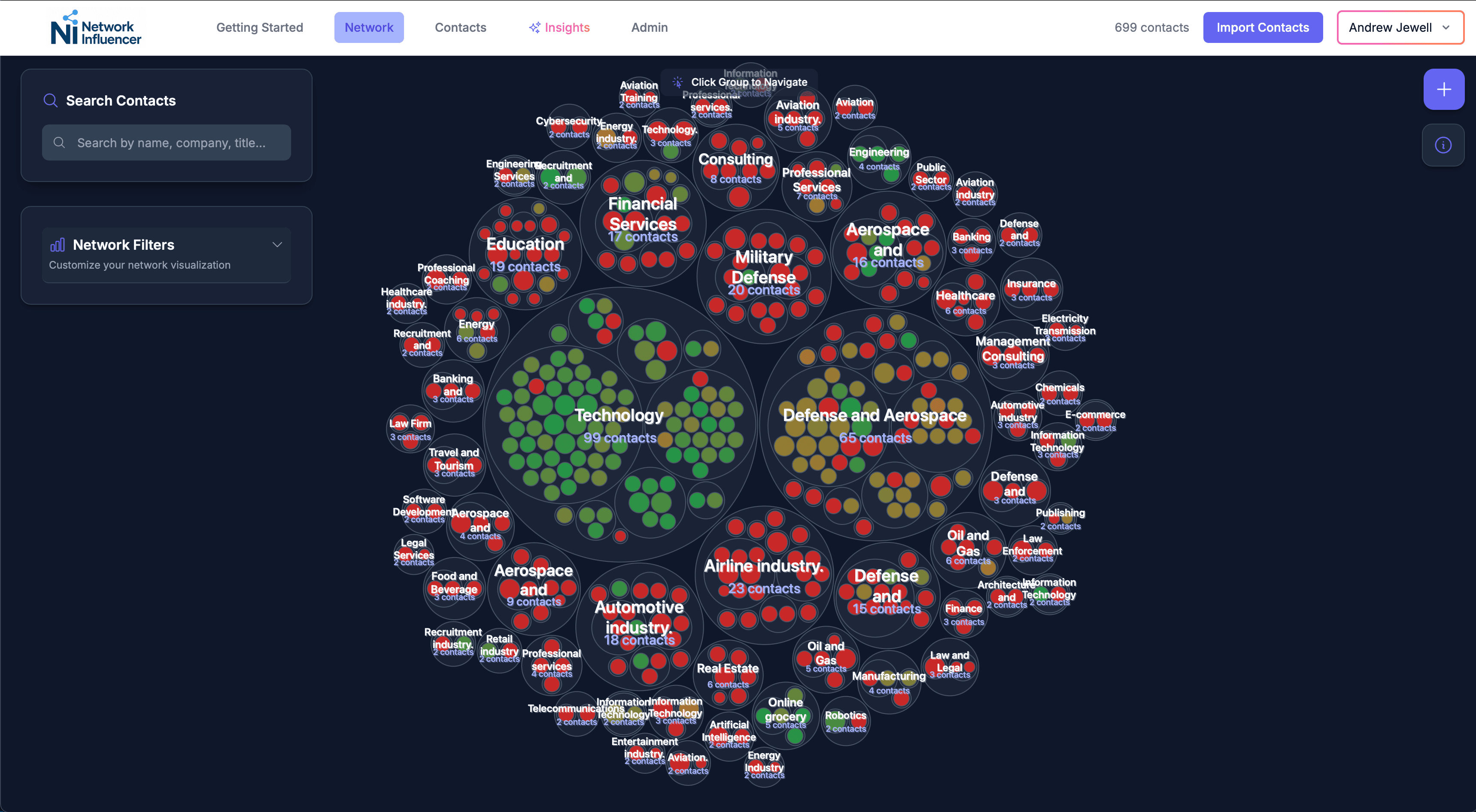
V3.1.0 Network View - Secondary Groupings
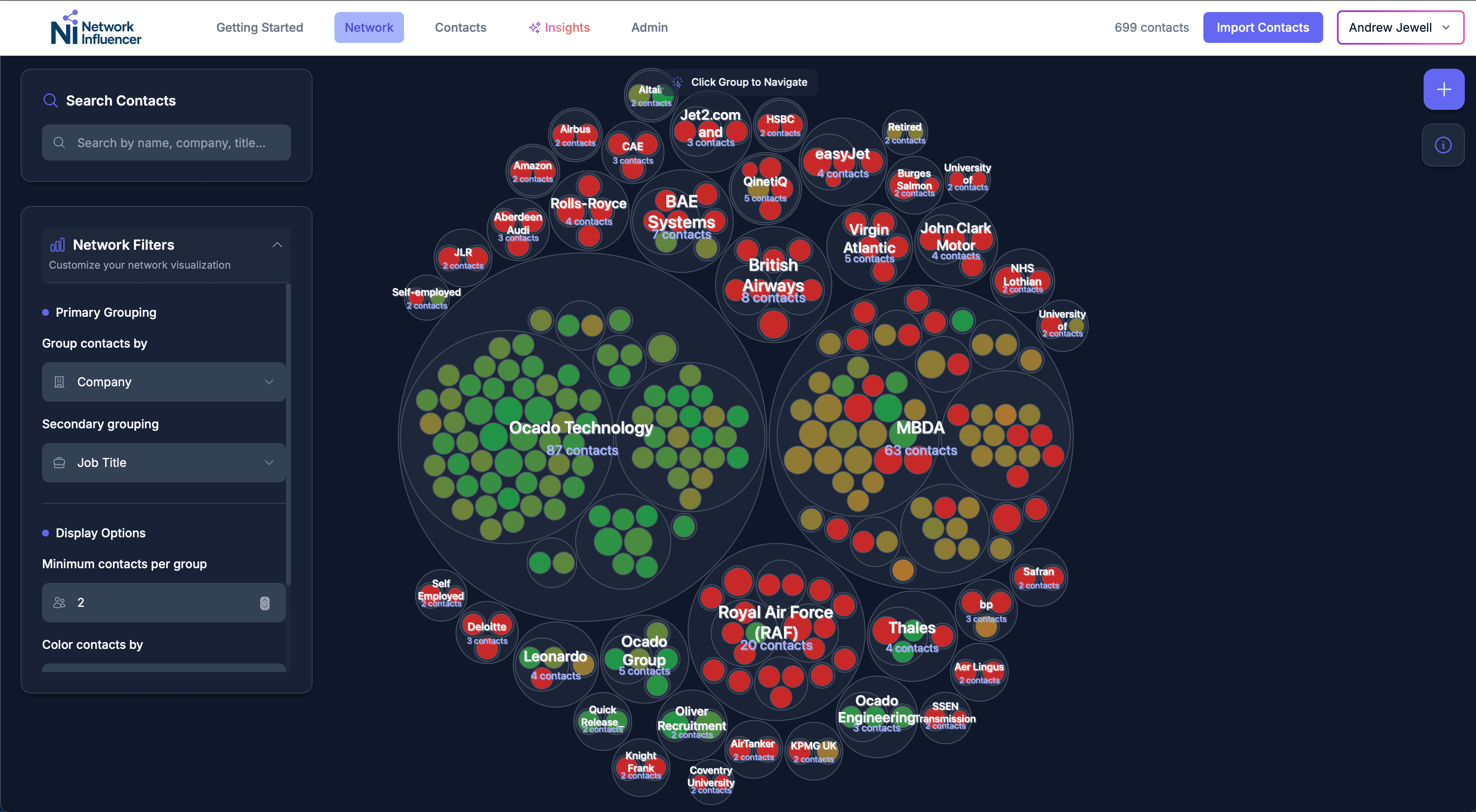
V3.1.0 Network View - Filters
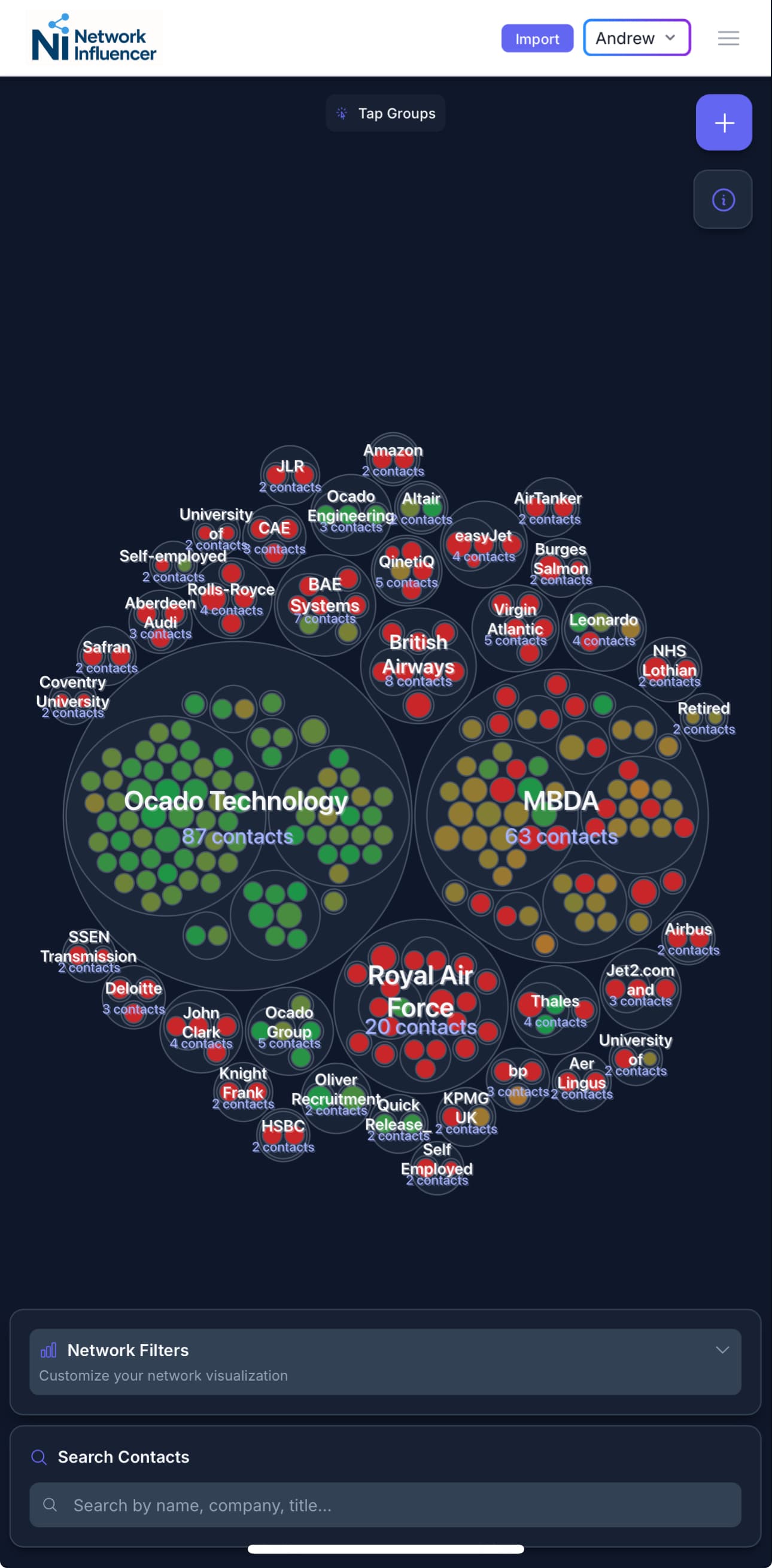
V3.1.0 Mobile View
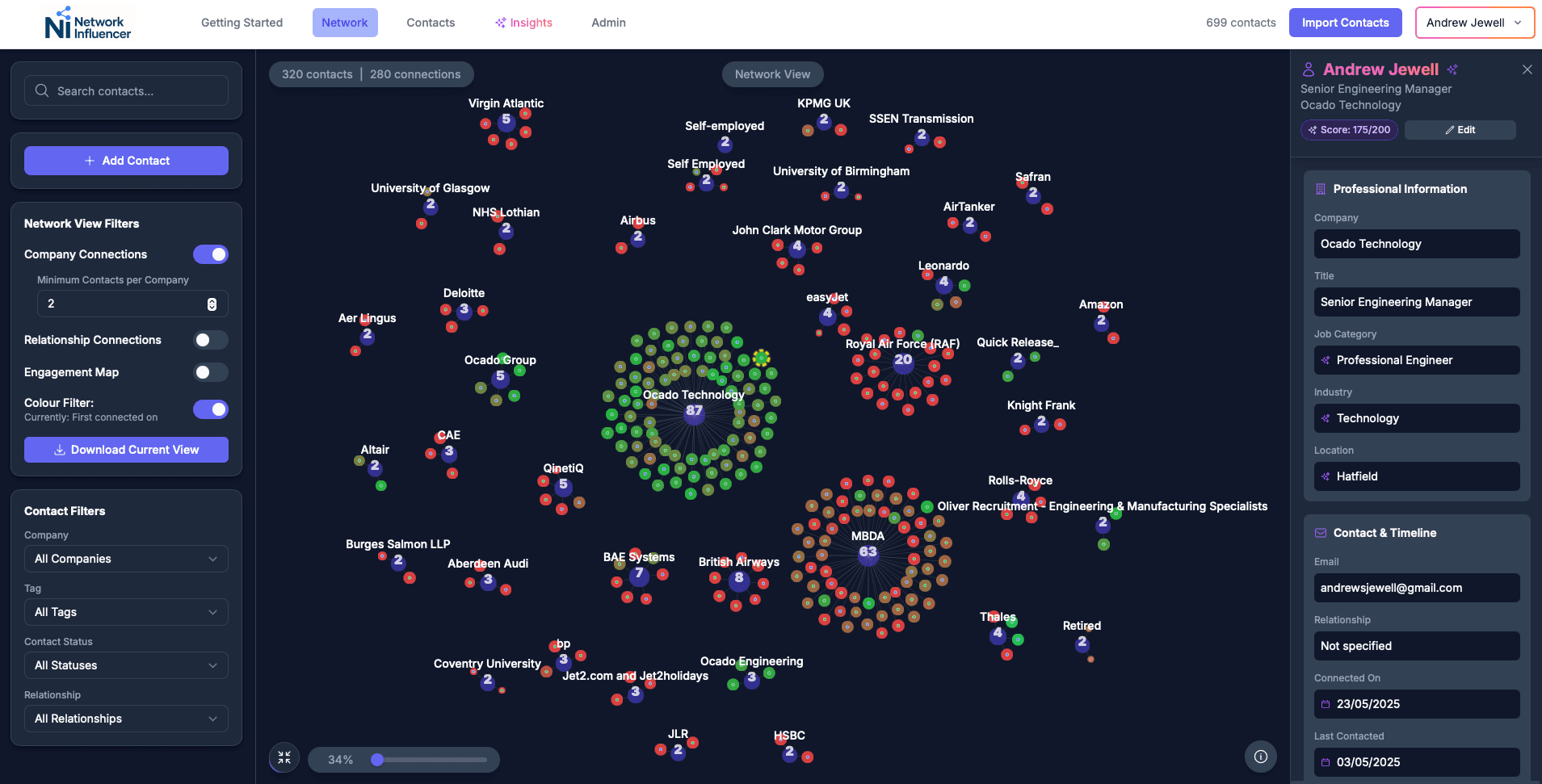
v2.6 Minor UI updates
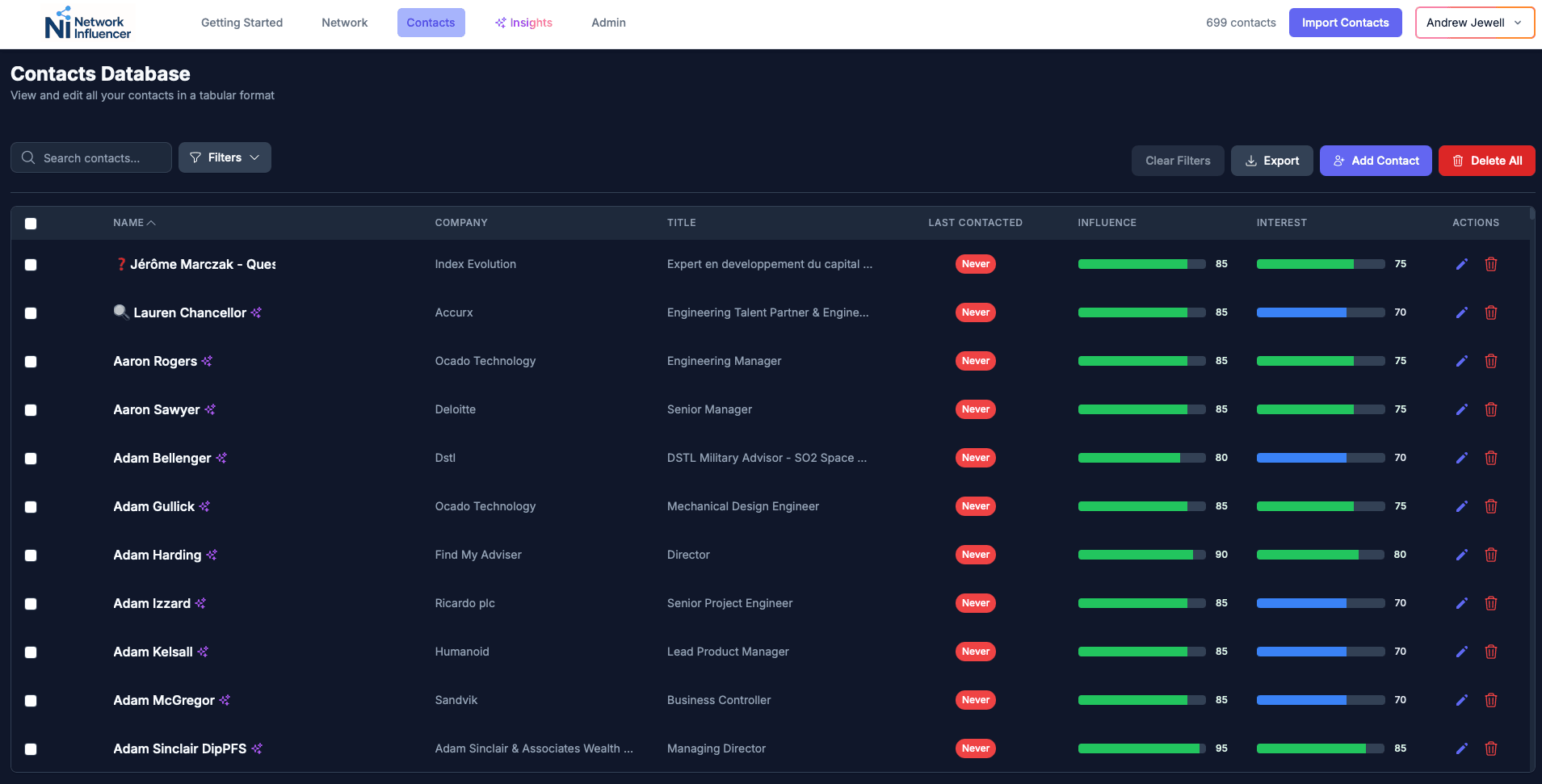
v2.6 Multi Contact Select
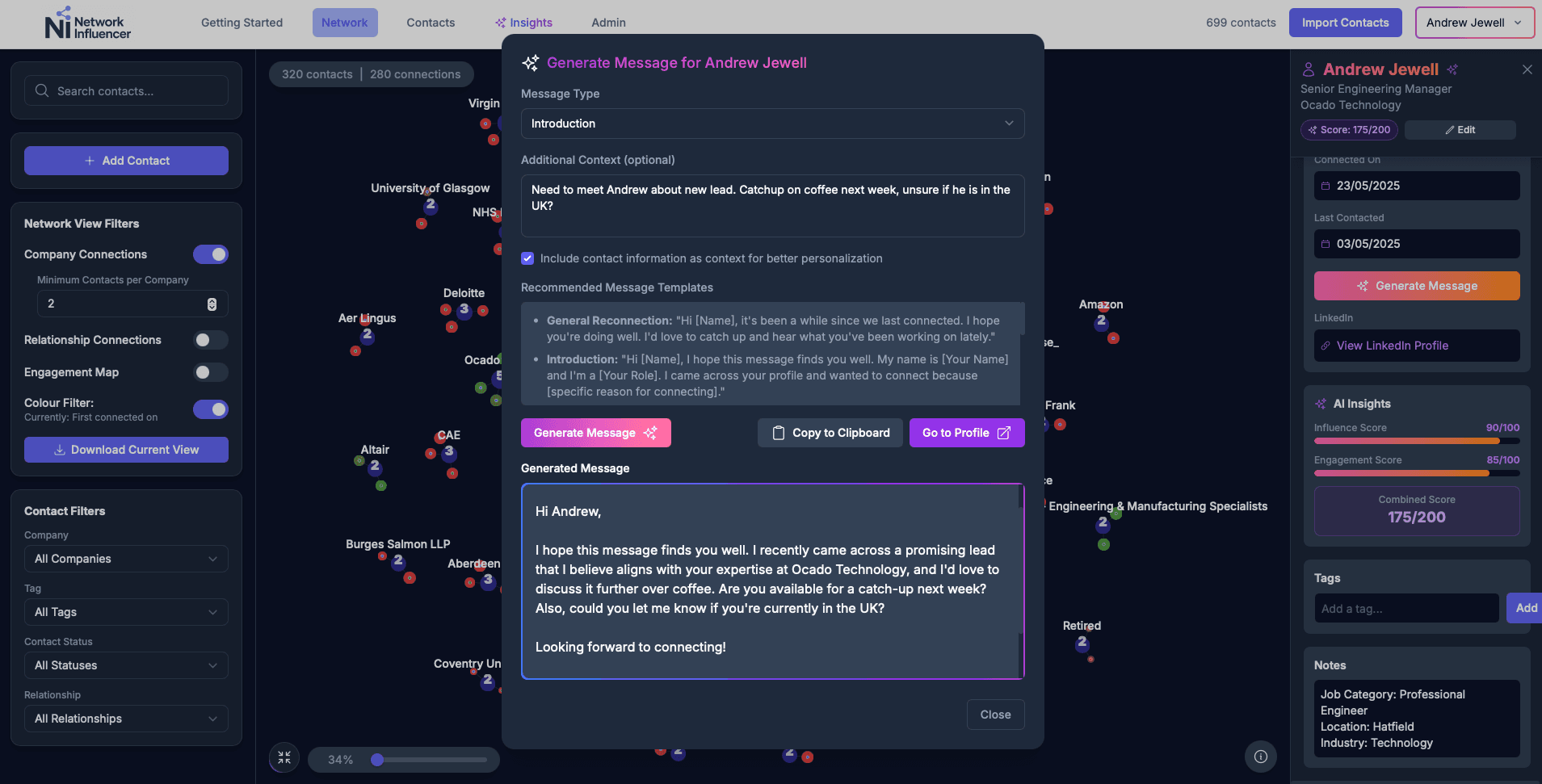
v2.6 Magic Message - More Context
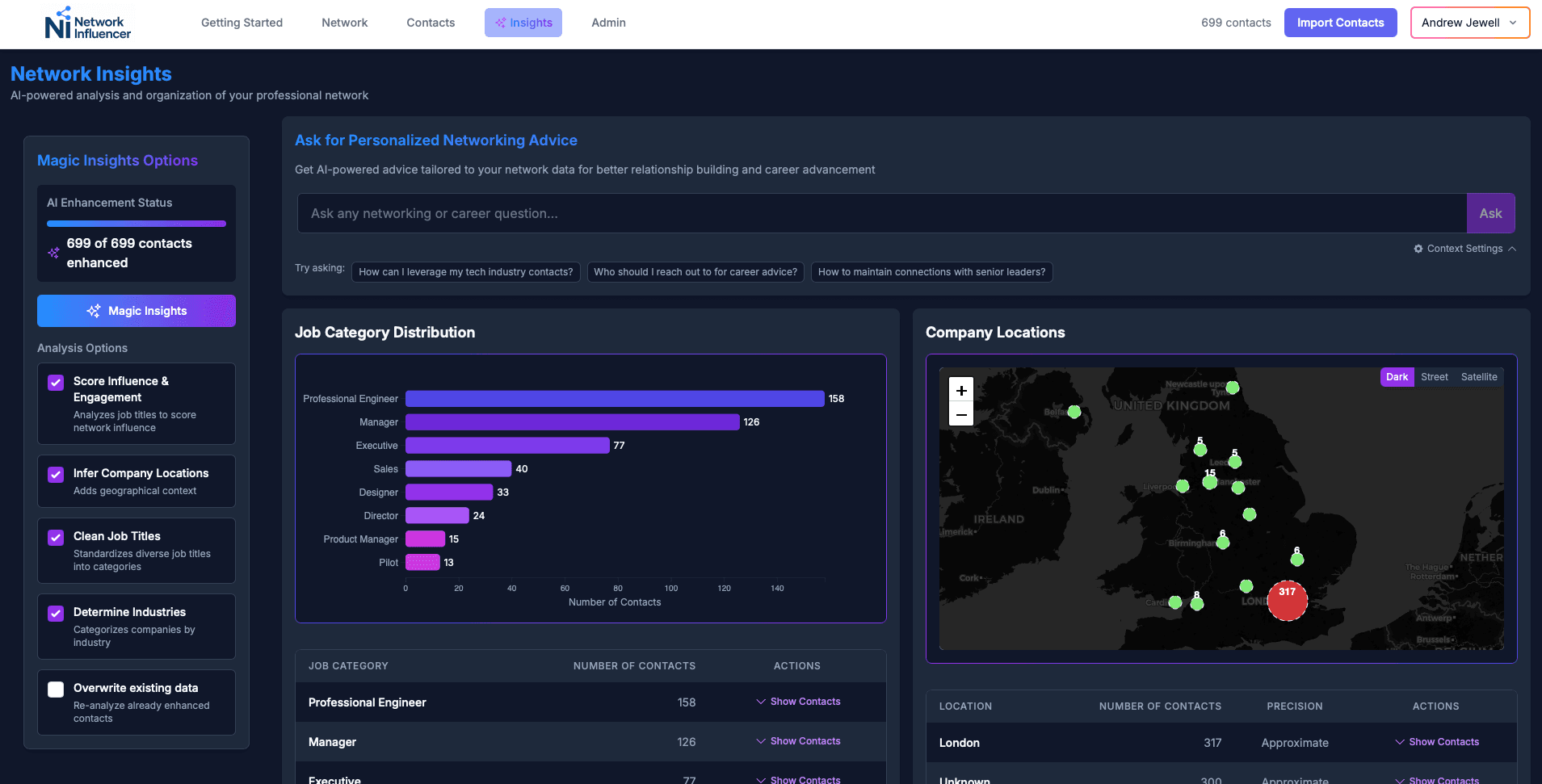
v2.6 Improved Intelligence Map
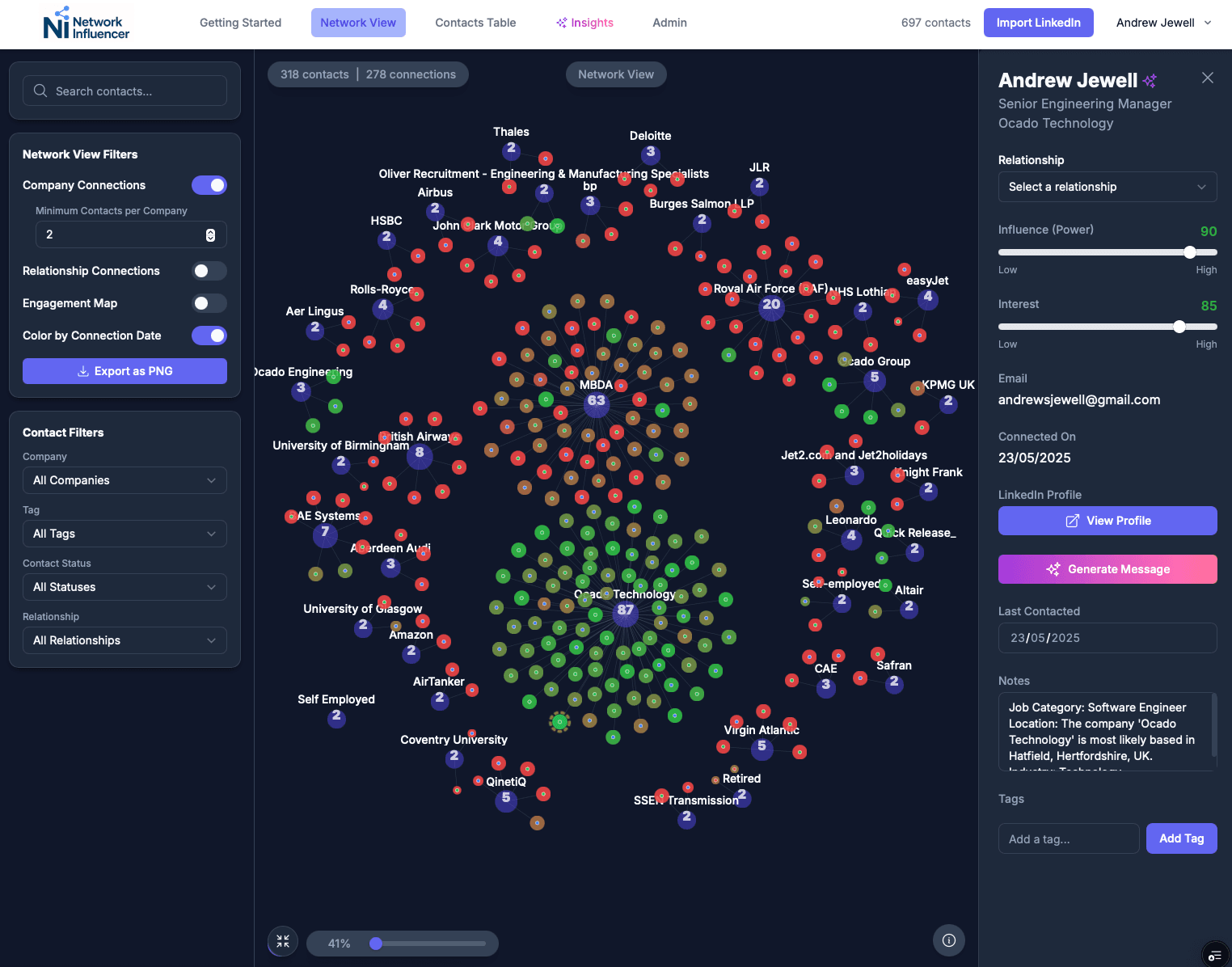
Network - USP of Network Influencer, visualising your network
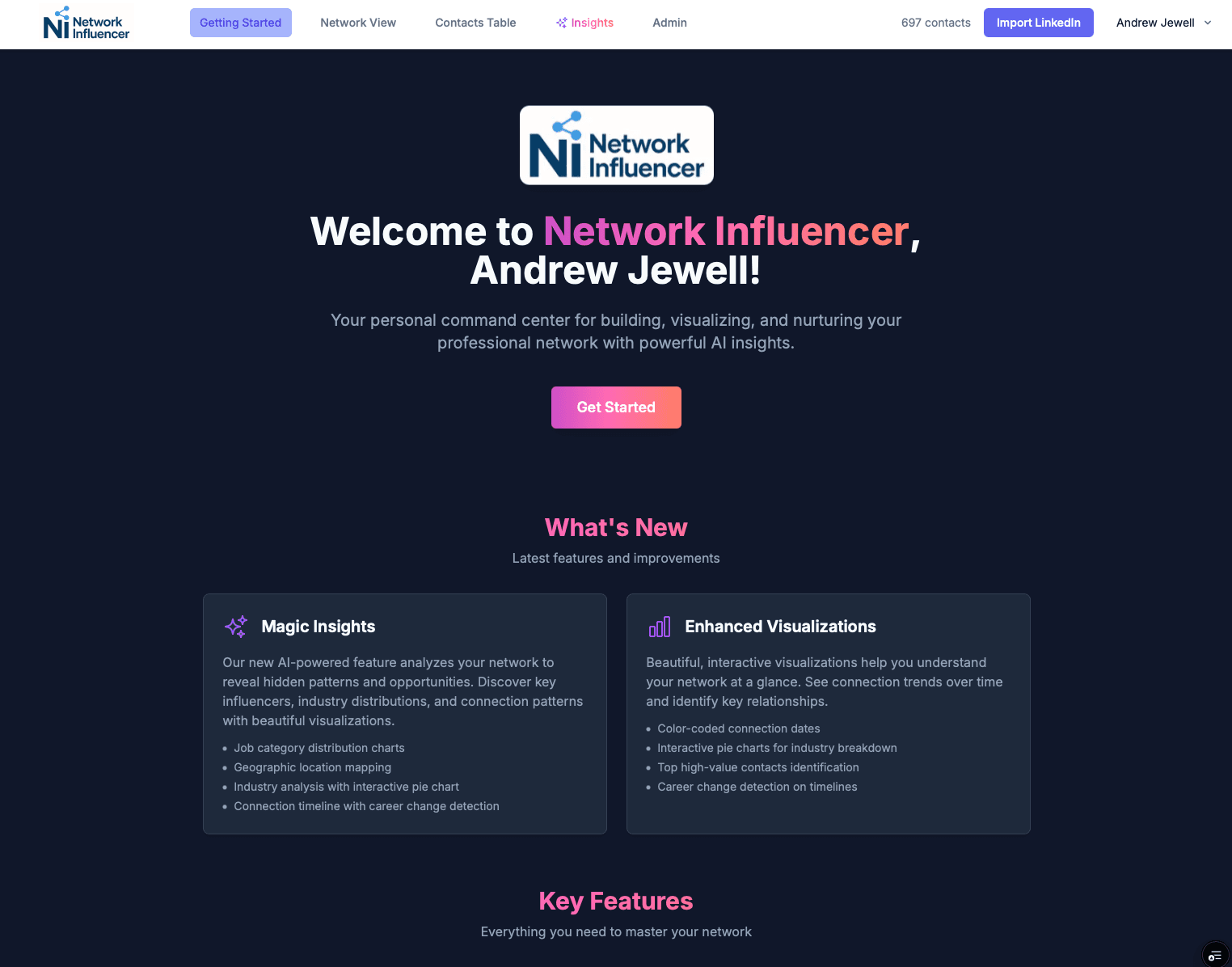
Magic Home - Introduce new features and upsell accounts
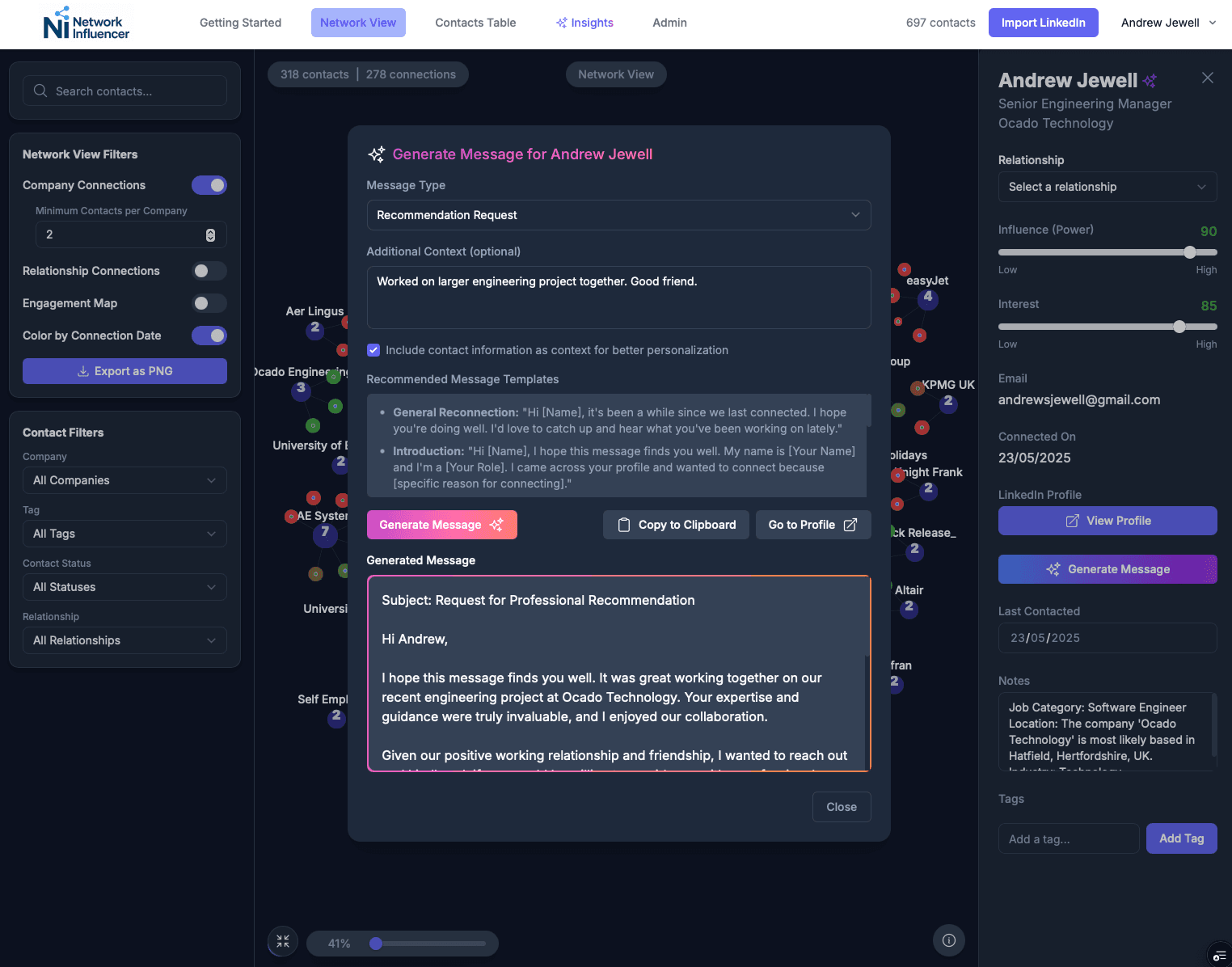
Magic Message - Encourage user engagement with their contacts.
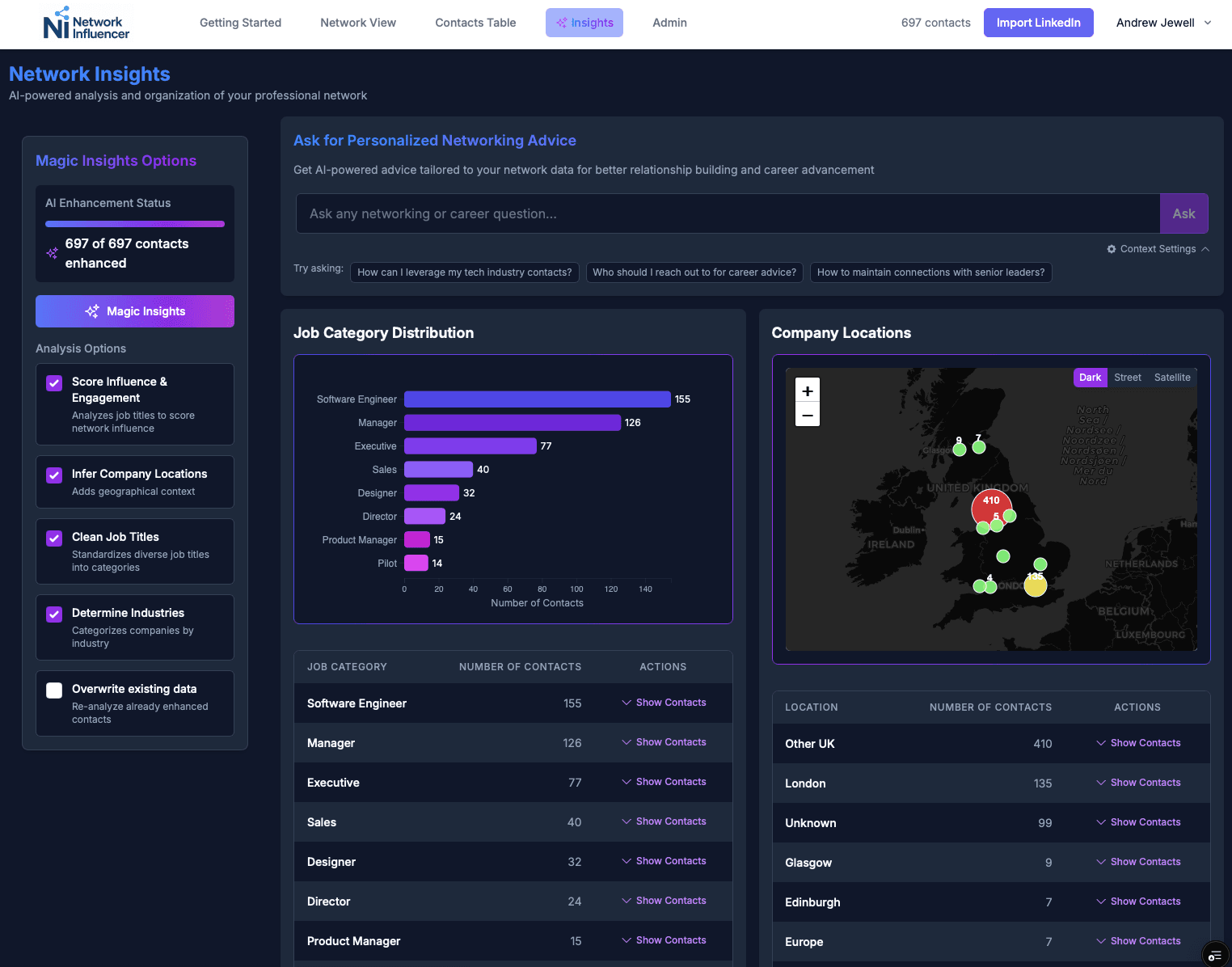
Magic Insights - Enriching your data quickly
Loading updates...
Project Roadmap
Loading timeline...
Upcoming Features
As a user, I want to be able to select and delete multiple contacts at once because this will streamline my contact management process by enabling bulk operations. This will affect the Contacts Table page, where I will see checkboxes next to each contact for selection and a "Delete Selected" button to execute the bulk delete operation. Additionally, I will receive UI feedback, such as a loading spinner or confirmation dialog, to inform me of the operation's status. This enhancement will ensure that the contact list in the UI and the backend database remain consistent and up-to-date.Completed
Medium Priority
As a user, I want to be able to search for contacts by name, location, industry, and job title because it will help me efficiently find relevant individuals for networking or job-seeking purposes. This will affect the contact management page by introducing a new search bar component, enhancing the user interface for seamless integration and real-time display of search results.Planned
Medium Priority
As a user, I want to be able to access the engagement tracker directly from the Engage dialog in the main menu header because it will streamline my workflow by eliminating unnecessary steps and allowing me to quickly see who I should reach out to. This will affect the main menu component and the Engage dialog component, ensuring that when I click the Engage button, the engagement tracker view opens by default.Completed
Medium Priority
As a user, I want to be able to quickly create a new contact with similar details by using a 'Create Similar' button because it will allow me to efficiently replicate and modify existing contact information from similar companies or backgrounds without starting from scratch. This feature will affect the 'Create New Contact' dialog and the Contacts Table page, where a new button will be added next to each contact entry. When I click this button, I expect the contact creation form to open pre-filled with the selected contact's data, which I can then adjust as needed. This enhancement will streamline my workflow by reducing repetitive data entry and ensuring consistency across contact entries.Planned
Medium Priority
As a user, I want to be able to receive more accurate networking insights because the system will send all my contact information to the AI, rather than just the top 15, enhancing the advice I receive. This will affect the Insights page, where I will see improved recommendations based on a complete set of my contacts.Planned
Medium Priority
Known Issues
As a user, I want to be able to create a new contact quickly because the database query performance will be optimized to reduce operation time from 15 seconds to under 2 seconds. This improvement will affect the contact creation feature on the application, specifically enhancing the efficiency of the "Create Contact" section.Open
Medium Priority
As a user, I want to be able to see and interact with the feedback dialog without it being obscured by the Map view because the implementation will adjust the UI layout to ensure the feedback dialog is always visible and accessible on all devices. This will affect the `LocationMap.tsx` page and the feedback dialog sections, ensuring they display correctly across various screen sizes and do not interfere with each other.Open
Medium Priority
As a user, I want to be able to see the legend clearly above the insights map because it will improve my ability to interpret map data effectively. This will affect the insights map section, specifically the layout and styling of the map component. The legend will be repositioned to display above the map, ensuring it is visible in all map modes without interfering with other UI components. This change will enhance the user experience by making the legend more accessible and easier to read across different screen sizes, ensuring that I can quickly understand the data being presented.Open
Medium Priority
As a user, I want to be able to see the contact count dynamically displayed on the insights and network pages, rather than in the main menu header, because this will provide a more relevant and focused view of my contact information where it matters most. This change will affect the insights and network pages by integrating dynamic display logic for the contact count, ensuring that the information is updated and accessible in these specific sections.Open
Medium Priority
As a user, I want to be able to have the Magic Insights popup automatically disappear when I initiate the cancellation process because this will improve the user experience by preventing unnecessary popups from remaining visible after I've decided to cancel. This change will affect the insights section of the application, specifically the Magic Insights popup component.Open
Medium Priority
Downloads
Business Plan - UK Launch
PDF487.3 KB
Project Challenges
Challenges in Building NetworkInfluencer 😫
As with any ambitious project, building NetworkInfluencer wasn't without its hurdles. Here's a rundown of the key challenges I faced:
Complexity of Network Analysis: Social network analysis is inherently complex. Visualising and interpreting the data to gain meaningful insights required a lot of research and experimentation. 🤯
Data Acquisition and Integration: Gathering data from various social media platforms presented a significant challenge. Each platform has its own API, rate limits, and data formats. Integrating these diverse data sources into a unified dataset was a time-consuming process. ⏳
Scalability Concerns: As the dataset grew, performance became a major concern. Optimising the code and database queries to handle large volumes of data was crucial for maintaining responsiveness. ⚙️
Maintaining Data Accuracy: Social media data is dynamic and often noisy. Ensuring the accuracy and reliability of the data used for analysis required robust data cleaning and validation techniques. 🧹
Balancing Functionality and Usability: Striking the right balance between providing powerful analytical tools and maintaining a user-friendly interface was a constant consideration. I wanted the tool to be accessible to users with varying levels of technical expertise. ⚖️
Keeping Up with Platform Changes: Social media platforms frequently update their APIs and data structures. Staying on top of these changes and adapting the code accordingly was an ongoing effort. 🔄
As with any ambitious project, building NetworkInfluencer wasn't without its hurdles. Here's a rundown of the key challenges I faced:
Complexity of Network Analysis: Social network analysis is inherently complex. Visualising and interpreting the data to gain meaningful insights required a lot of research and experimentation. 🤯
Data Acquisition and Integration: Gathering data from various social media platforms presented a significant challenge. Each platform has its own API, rate limits, and data formats. Integrating these diverse data sources into a unified dataset was a time-consuming process. ⏳
Scalability Concerns: As the dataset grew, performance became a major concern. Optimising the code and database queries to handle large volumes of data was crucial for maintaining responsiveness. ⚙️
Maintaining Data Accuracy: Social media data is dynamic and often noisy. Ensuring the accuracy and reliability of the data used for analysis required robust data cleaning and validation techniques. 🧹
Balancing Functionality and Usability: Striking the right balance between providing powerful analytical tools and maintaining a user-friendly interface was a constant consideration. I wanted the tool to be accessible to users with varying levels of technical expertise. ⚖️
Keeping Up with Platform Changes: Social media platforms frequently update their APIs and data structures. Staying on top of these changes and adapting the code accordingly was an ongoing effort. 🔄
Project Solutions & Learnings
## Solutions and Learnings from NetworkInfluencer ✨
Despite the challenges, I was able to overcome them through a combination of careful planning, diligent execution, and a willingness to learn. Here's a summary of the solutions I implemented and the key lessons I learned along the way:
1. Modular Design: I adopted a modular design approach to break down the project into smaller, more manageable components. This made it easier to develop, test, and maintain the codebase. 🧩
2. API Abstraction Layer: To handle the diverse APIs of different social media platforms, I created an abstraction layer that provided a consistent interface for data access. This simplified the integration process and reduced the impact of platform-specific changes. 🧱
3. Database Optimisation: I invested time in optimising the database schema and queries to improve performance. This included using indexing, caching, and other techniques to reduce query execution time. 🚀
4. Data Validation and Cleaning: I implemented robust data validation and cleaning procedures to ensure the accuracy of the data used for analysis. This involved identifying and correcting errors, removing duplicates, and handling missing values. 🧼
5. Iterative Development: I followed an iterative development process, releasing frequent updates with new features and improvements. This allowed me to gather user feedback early and often, and to adapt the project to meet their needs. 🔄
6. Continuous Learning: Building NetworkInfluencer was a great learning experience. I gained a deeper understanding of social network analysis, data integration, and software development best practices. I also learned the importance of perseverance, adaptability, and a willingness to embrace new challenges. 🧠
7. Community Engagement: Engaging with the open-source community was invaluable. I learned a lot from other developers and received helpful feedback on my code. Contributing back to the community is something I plan to continue doing. 🙌
Despite the challenges, I was able to overcome them through a combination of careful planning, diligent execution, and a willingness to learn. Here's a summary of the solutions I implemented and the key lessons I learned along the way:
1. Modular Design: I adopted a modular design approach to break down the project into smaller, more manageable components. This made it easier to develop, test, and maintain the codebase. 🧩
2. API Abstraction Layer: To handle the diverse APIs of different social media platforms, I created an abstraction layer that provided a consistent interface for data access. This simplified the integration process and reduced the impact of platform-specific changes. 🧱
3. Database Optimisation: I invested time in optimising the database schema and queries to improve performance. This included using indexing, caching, and other techniques to reduce query execution time. 🚀
4. Data Validation and Cleaning: I implemented robust data validation and cleaning procedures to ensure the accuracy of the data used for analysis. This involved identifying and correcting errors, removing duplicates, and handling missing values. 🧼
5. Iterative Development: I followed an iterative development process, releasing frequent updates with new features and improvements. This allowed me to gather user feedback early and often, and to adapt the project to meet their needs. 🔄
6. Continuous Learning: Building NetworkInfluencer was a great learning experience. I gained a deeper understanding of social network analysis, data integration, and software development best practices. I also learned the importance of perseverance, adaptability, and a willingness to embrace new challenges. 🧠
7. Community Engagement: Engaging with the open-source community was invaluable. I learned a lot from other developers and received helpful feedback on my code. Contributing back to the community is something I plan to continue doing. 🙌