

Host Buddy
Active ProjectAI/ML
HostBuddy aims to resolve the lost applications/deep research/tools created using AI. HostBuddy is locally deployed onto the users workstation and enables the user to copy and paste AI generated code into a run time environment so they can utilise tools created across multiple AI platforms, making them more accessible and manageable for the user. HostBuddy supports .html, React and Python applications and is deployed in a lightweight Electron application that can be distributed to Apple and Microsoft environments and run locally.
9
Total Feedback
Aug 23
Last Updated
Key Features
localhostingappstools
Tech Stack
ElectronReactPythonNodeJS+1 more
Image Gallery
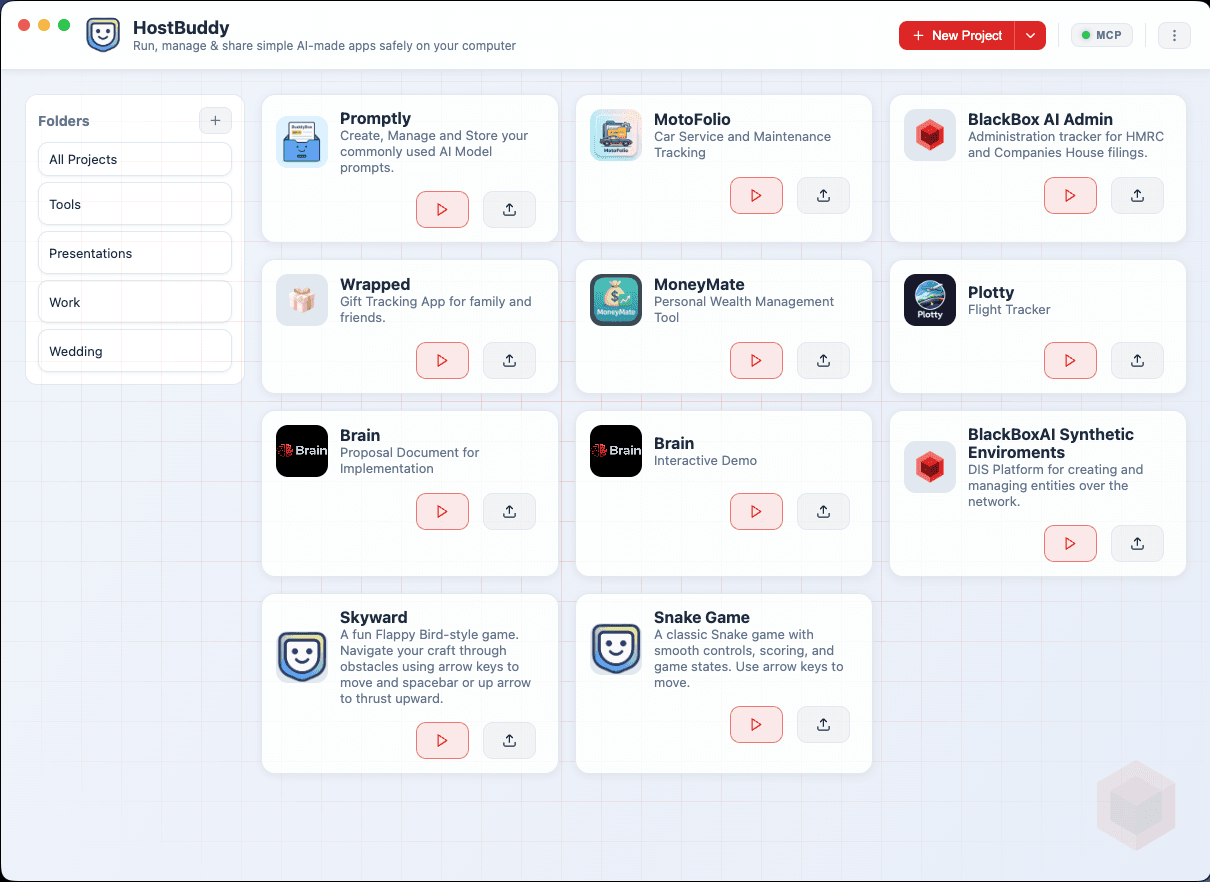
V2.0 - Light mode
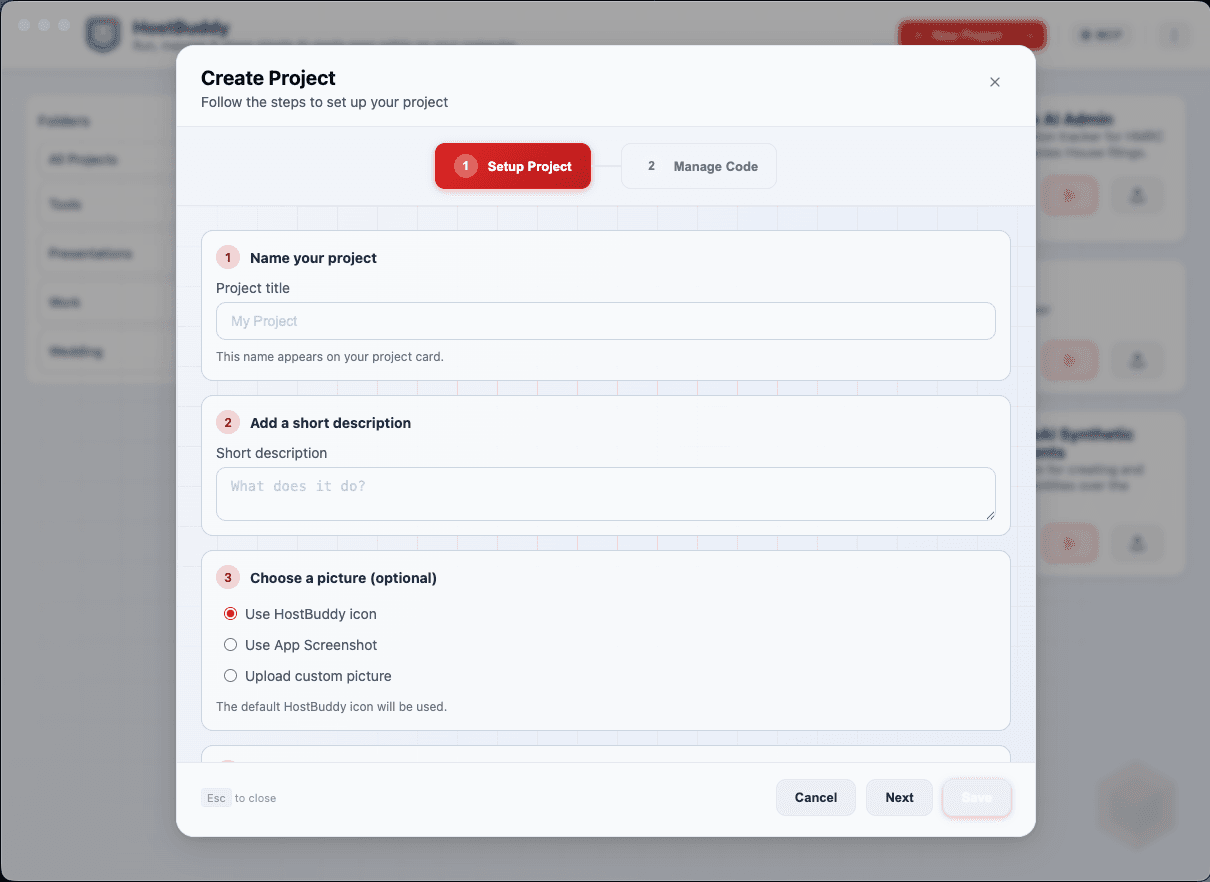
V2.0 - New Project UI
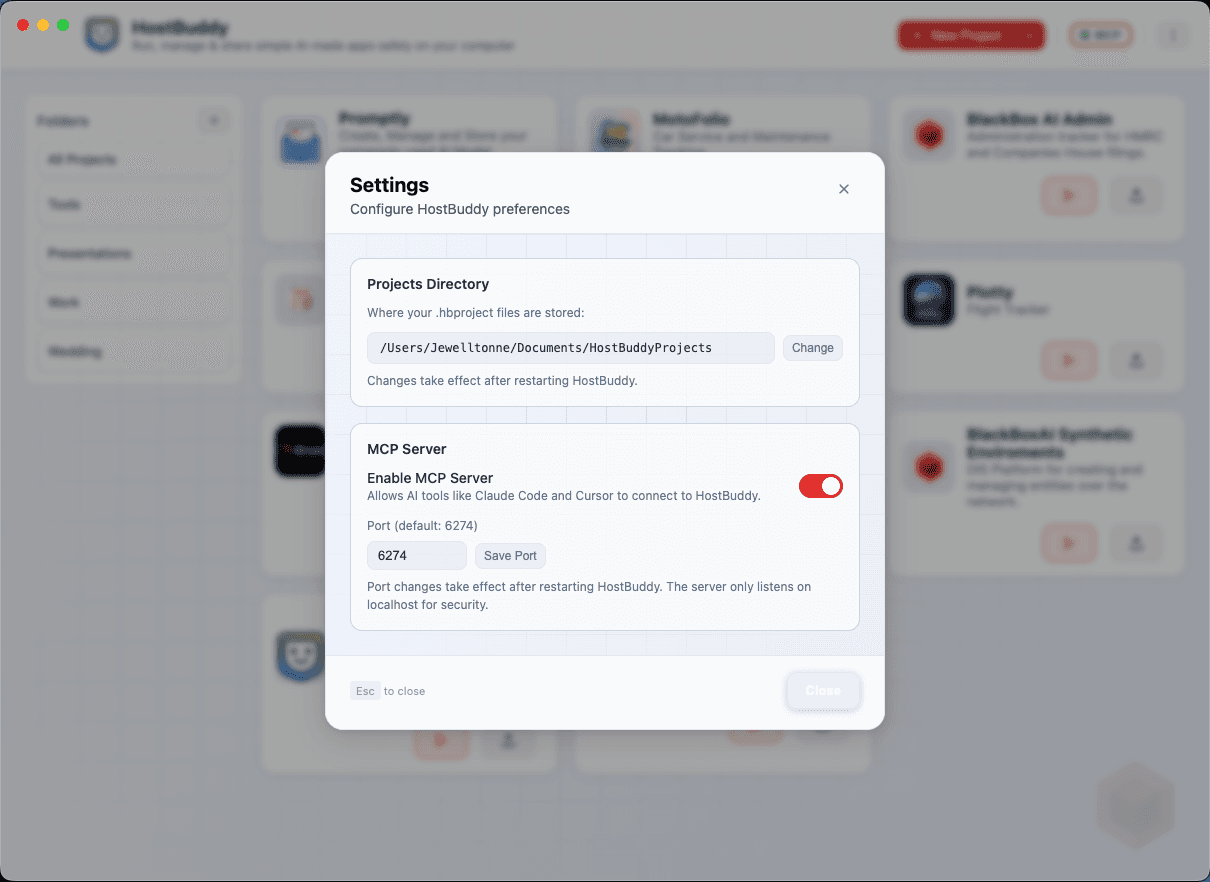
V2.0 - MCP Server
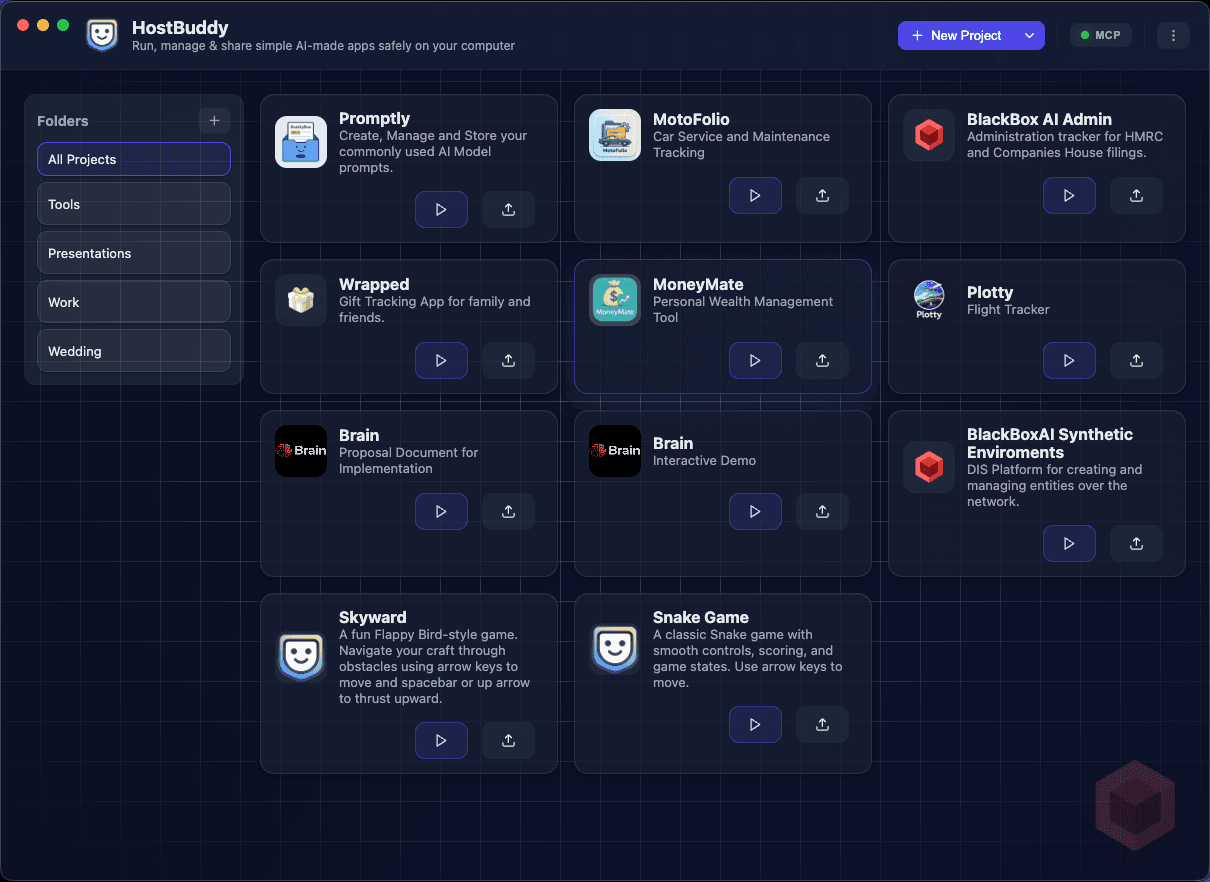
V2.0 - Dark mode
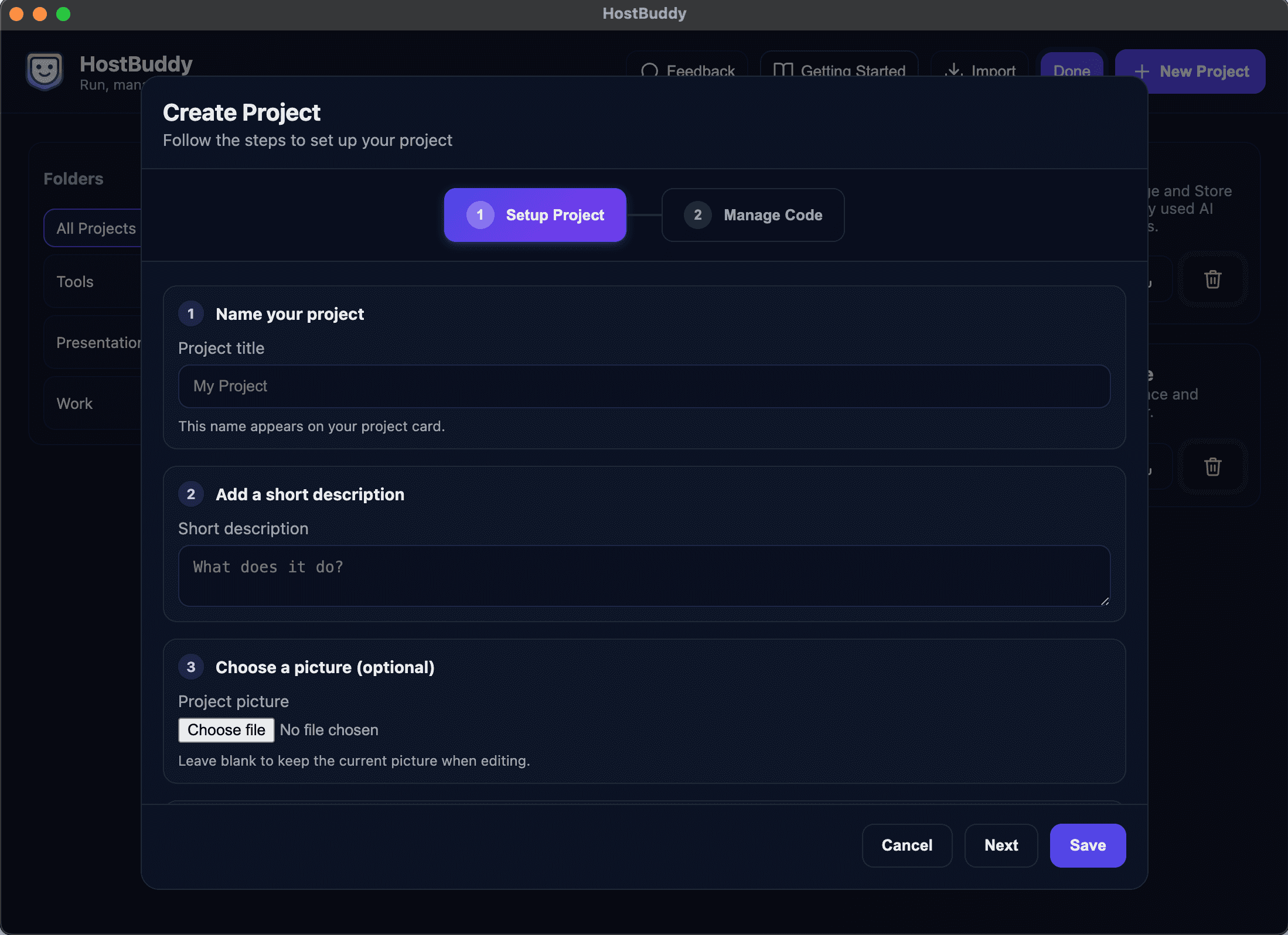
v1.3 New create project workflow
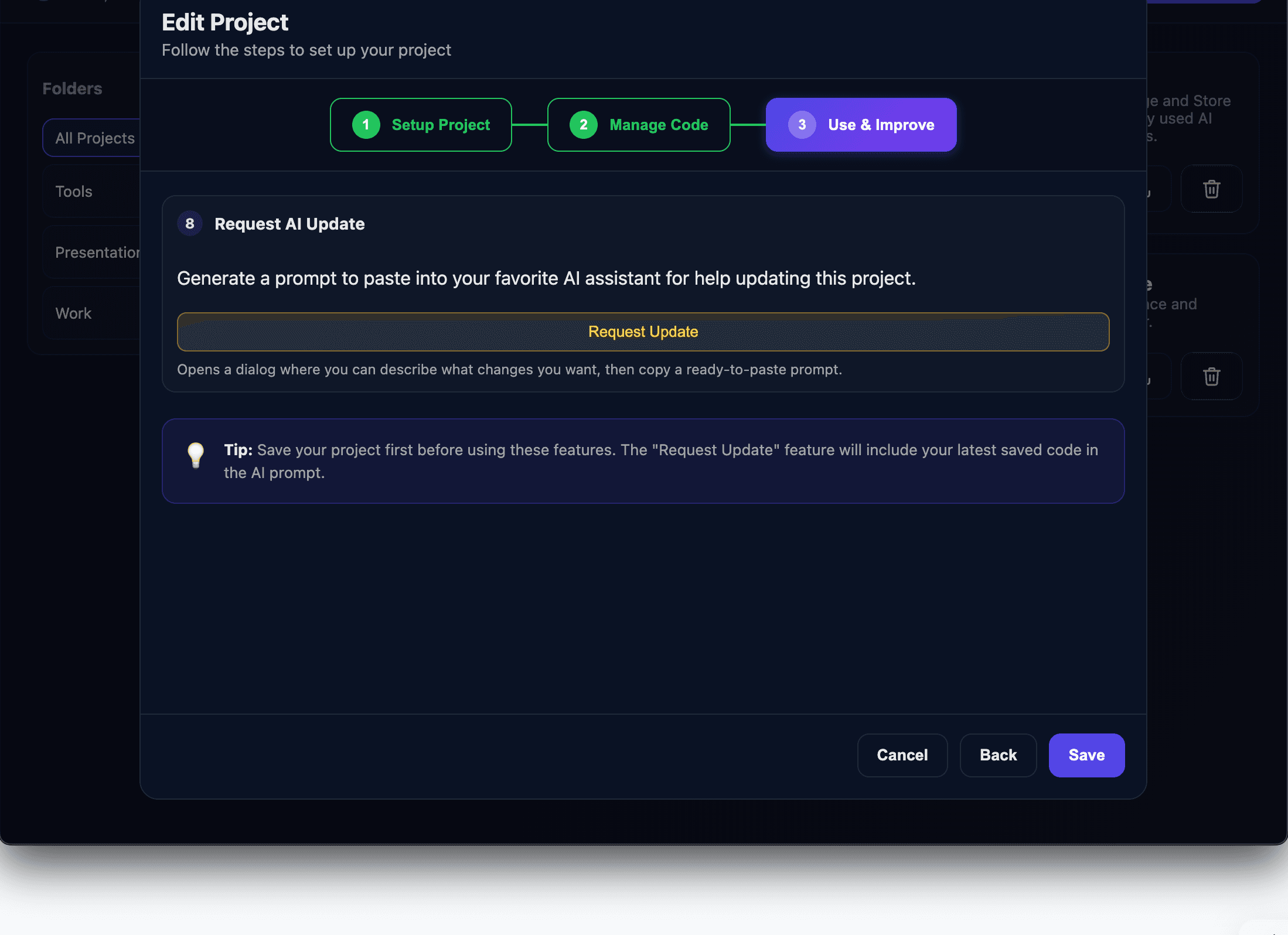
v1.3 New project edit workflow
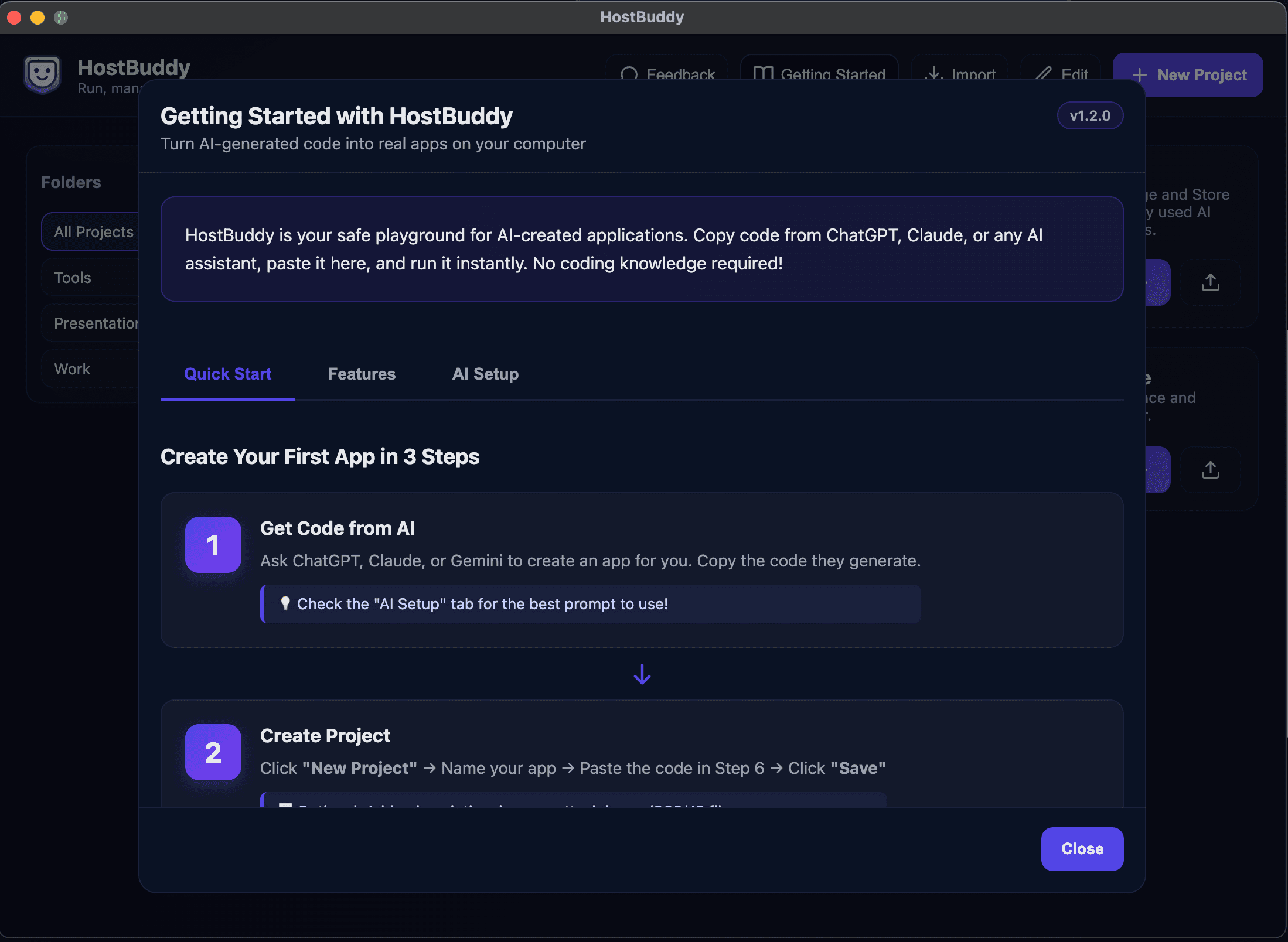
V1.2 Revised Getting Started page and Prompt.
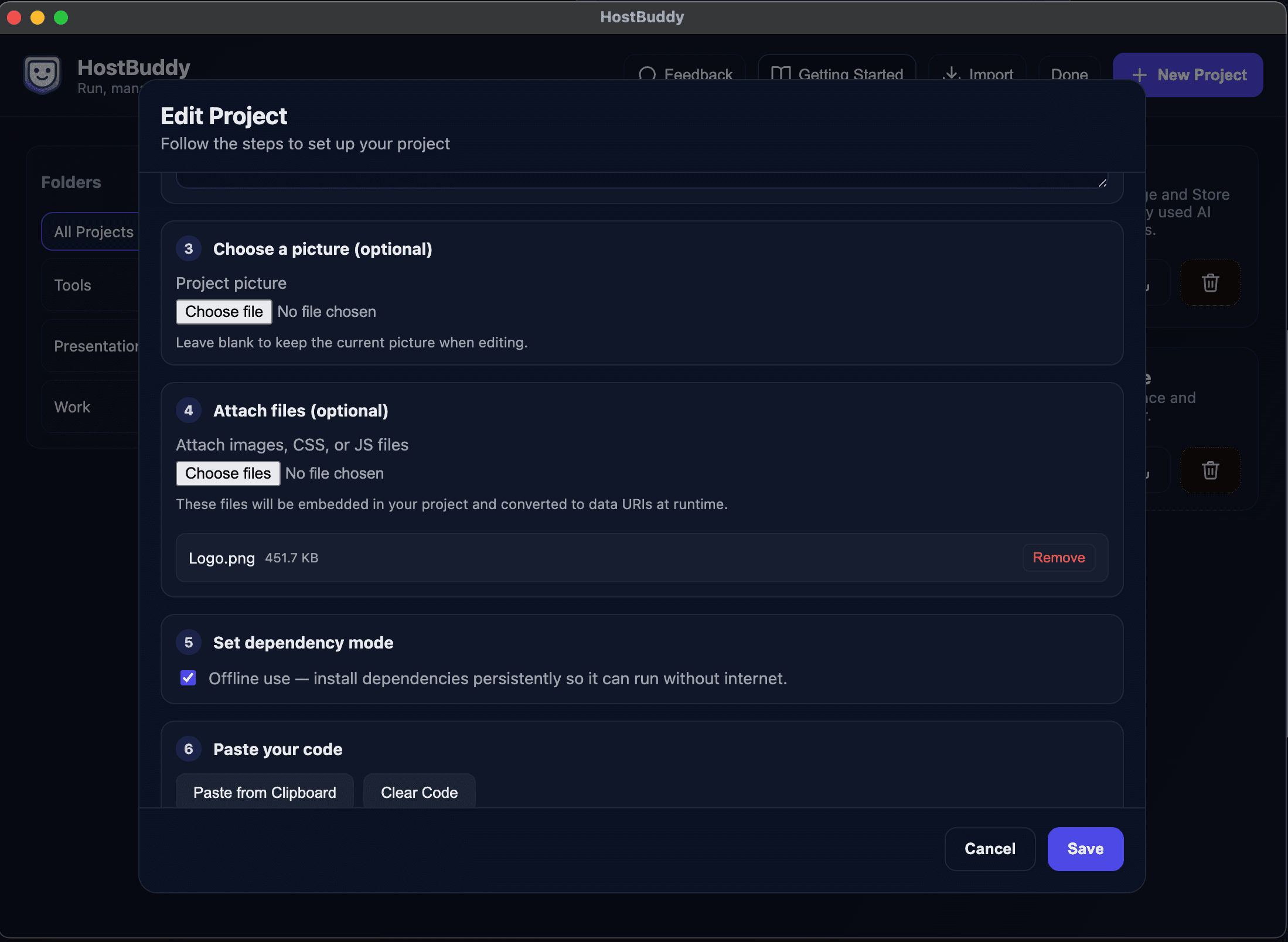
V1.2 - Project Attachments
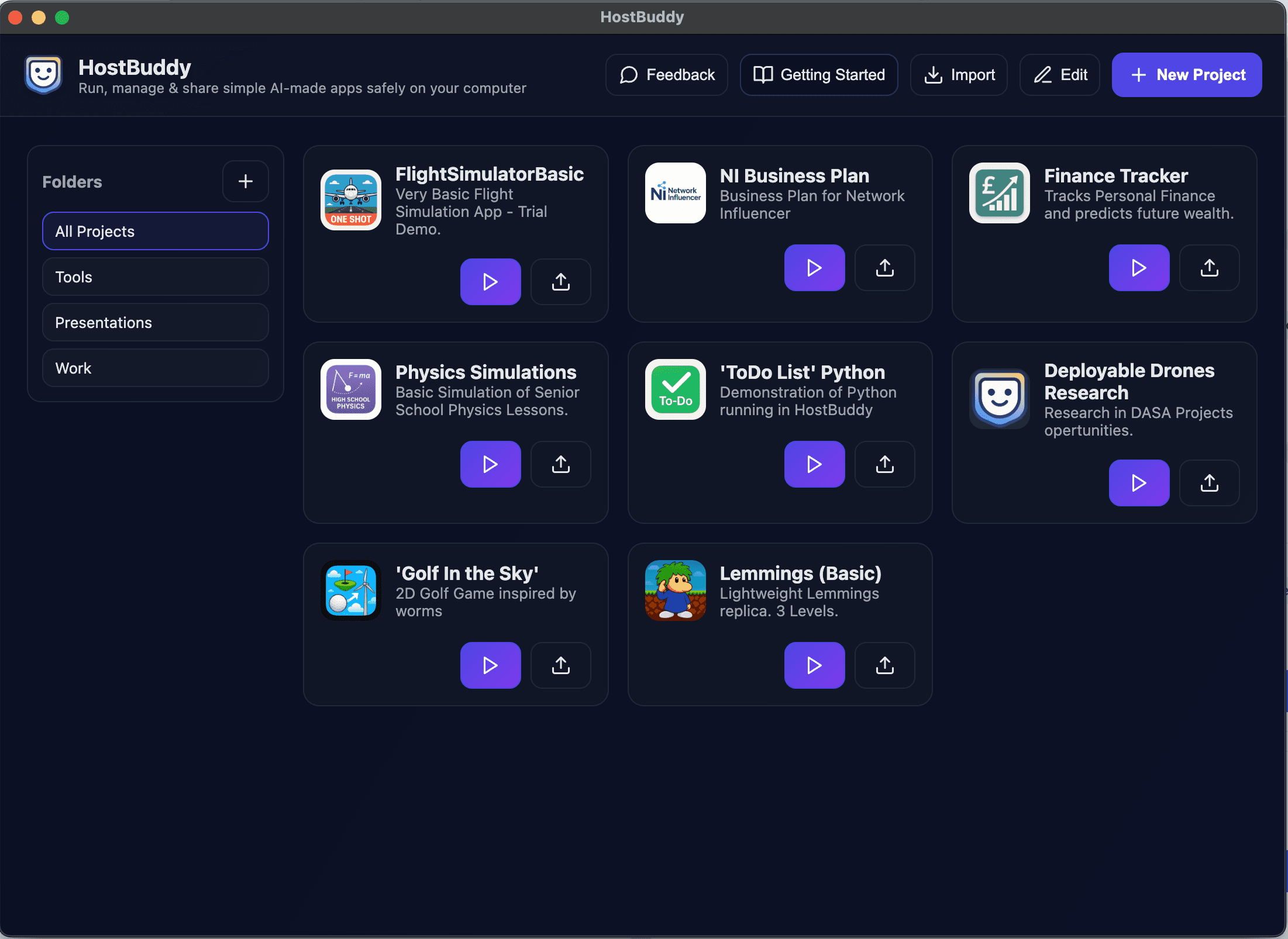
V1.0 Home Page
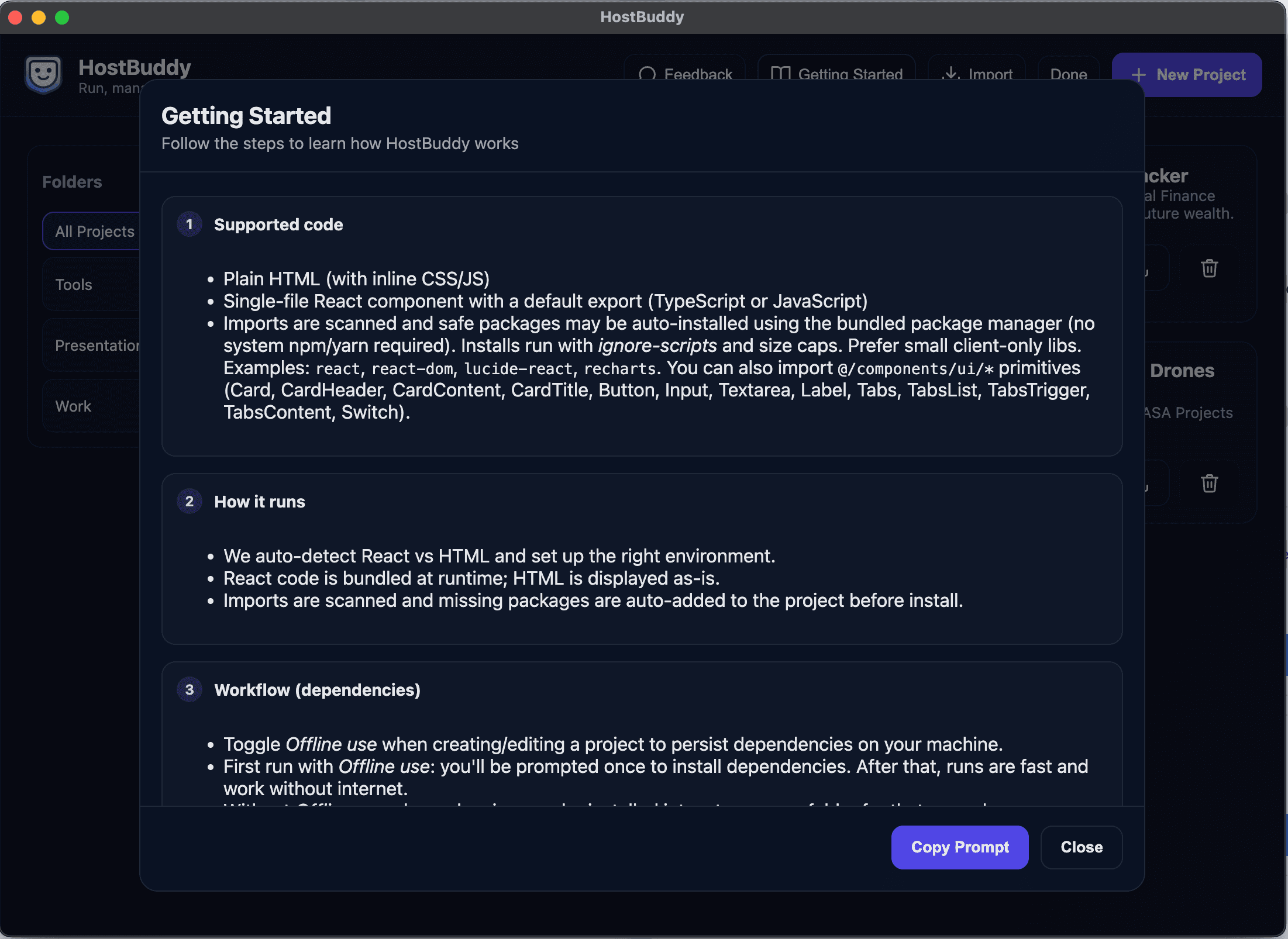
V1.0 Getting Started

V1.0 New Project
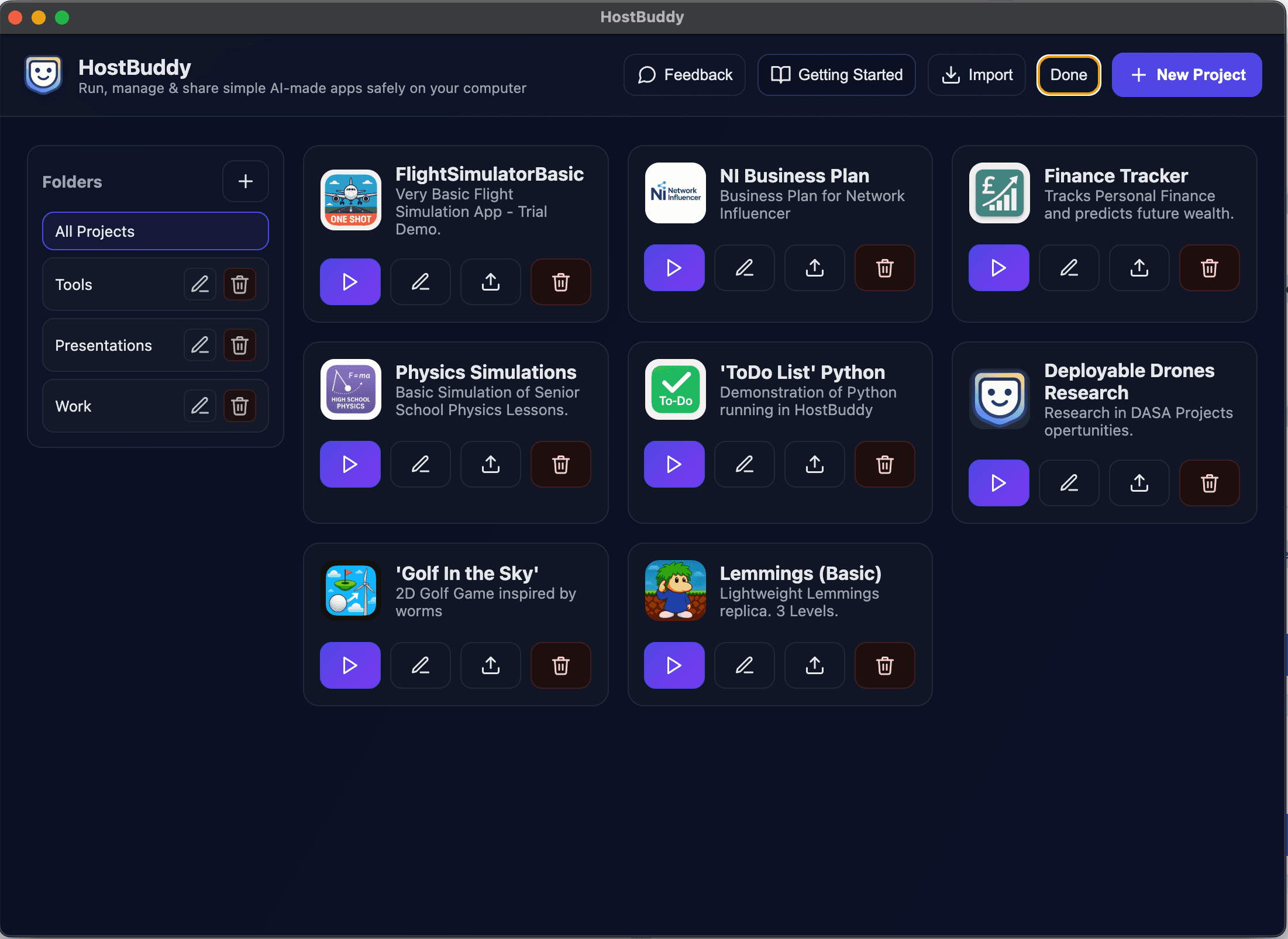
V1.0 Edit Projects
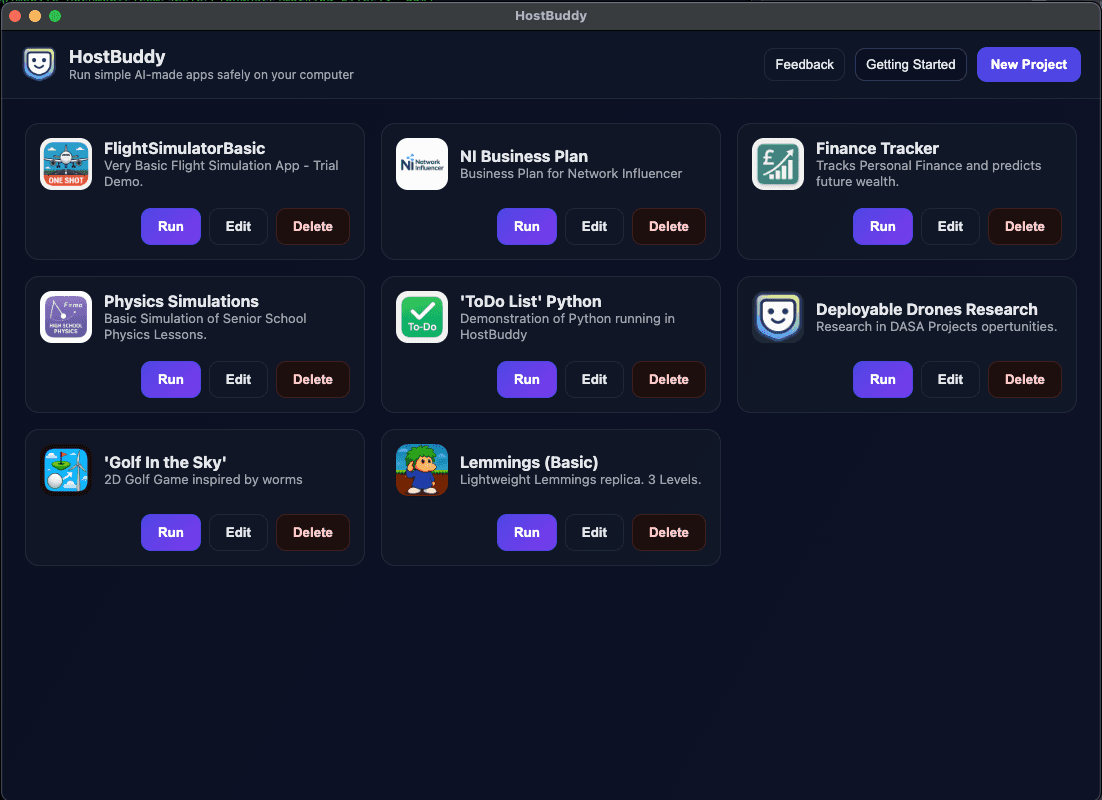
Application Interface
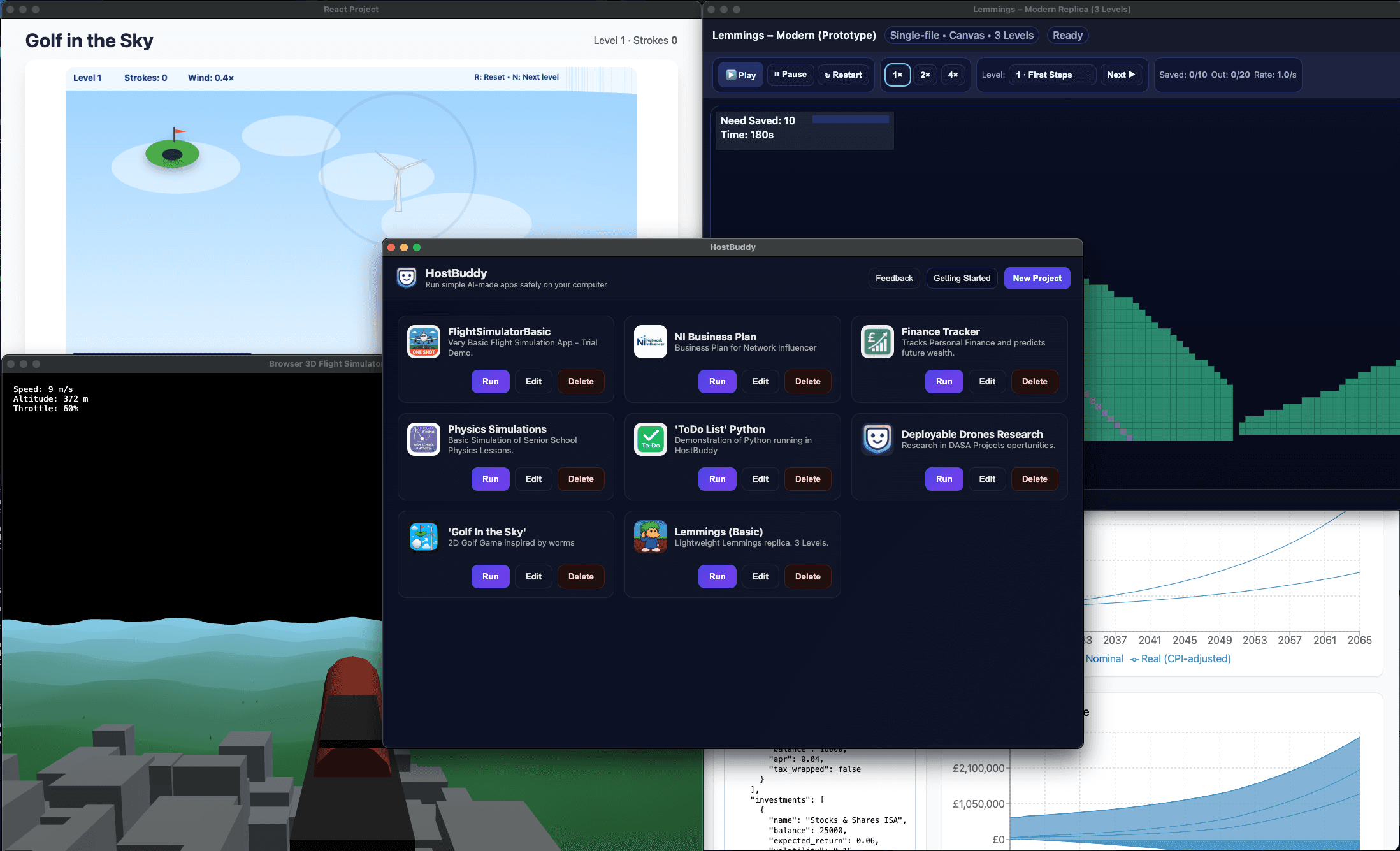
Example Apps v0.1.0
Loading updates...
Project Roadmap
Loading timeline...
Upcoming Features
MCP Server that enables tools to create apps and provide information to AI on how to create those apps. So in the LLM all you have to ask for is create a HostBuddy app.Completed
Medium Priority
As a user, I want to be able to efficiently create, manage, and import/export projects using an updated interface. This will affect the project creation modal, folders sidebar, and import/export functionalities in the application.Planned
Medium Priority
As a user, I want to be able to manage customized prompts in the Host Buddy app by tagging them with preferred AI model names and attaching relevant files because this will enhance my ability to organize and utilize prompts effectively. This will affect the prompts management section, specifically impacting the PromptList and PromptEditor components where I will create, edit, and delete prompts, tag them, and add file attachments.Completed
Medium Priority
As a user, I want to be able to import and export projects using JSON files because this will facilitate easy sharing and backup of my project data. This will affect the project management interface by adding new "Export" and "Import" buttons. The "Export" button will allow me to download my project data as a JSON file, while the "Import" button will enable me to upload a JSON file to add projects to my existing list. This feature will ensure that my project data is transferred without any loss or corruption, enhancing my ability to manage projects effectively.Completed
Medium Priority
As a user, I want to be able to install and use Host Buddy on my Windows computer because the application will be made compatible with Windows, ensuring it functions seamlessly like the macOS version. This will affect the installation process, the application's main interface, and the project storage sections, ensuring they are tailored for Windows environments.Completed
Medium Priority
Known Issues
No known issues
Downloads
HostBuddy v2.0 - MacOS (Apple Silicon)
DMG117.6 MB
HostBuddy v2.0 - Windows (x64)
EXE93.0 MB
Project Challenges
•Cross‑platform binaries (esbuild): esbuild distributes platform‑specific binaries as optional dependencies. A single nodemodules cannot satisfy both macOS arm64 and x64. I solved this by providing separate scripts: native arm64 install for M‑series Macs and Rosetta‑based install for x64 builds.
- Bundling a package manager: I wanted dependency installs without requiring system npm/yarn. Bundling pnpm and running it via ELECTRONRUNASNODE worked well, with install flags to preserve safety.
Security by default: Keeping the renderer sandboxed and APIs minimal required some discipline. The preload layer exposes only what’s needed.
- Unsigned distribution friction: Gatekeeper (macOS) and SmartScreen (Windows) will warn for unsigned builds. I documented the first‑run steps and left signing/notarisation as a follow‑up.
- Bundling a package manager: I wanted dependency installs without requiring system npm/yarn. Bundling pnpm and running it via ELECTRONRUNASNODE worked well, with install flags to preserve safety.
Security by default: Keeping the renderer sandboxed and APIs minimal required some discipline. The preload layer exposes only what’s needed.
- Unsigned distribution friction: Gatekeeper (macOS) and SmartScreen (Windows) will warn for unsigned builds. I documented the first‑run steps and left signing/notarisation as a follow‑up.
Project Solutions & Learnings
•Keep the runtime surface area tiny. A small, explicit preload bridge is easier to reason about and secure.
- Invest in developer ergonomics early: a couple of reliable build scripts and CI artifacts remove ambiguity when packaging.
- Prefer simple, safe defaults over configuration sprawl. The app runs well with a narrow set of features done properly.
- When supporting React, treat bundling as an implementation detail: detect the code shape, scaffold minimally, install just what’s needed, then bundle.
- Invest in developer ergonomics early: a couple of reliable build scripts and CI artifacts remove ambiguity when packaging.
- Prefer simple, safe defaults over configuration sprawl. The app runs well with a narrow set of features done properly.
- When supporting React, treat bundling as an implementation detail: detect the code shape, scaffold minimally, install just what’s needed, then bundle.